Most managers believe that warehouse operations are unpredictable. That’s not true. Every movement within your warehouse follows a pattern, and the risks follow those same patterns. This is exactly where warehouse safety barriers come in. ‘
Guardrails are not meant to be placed randomly. They are designed to control these predictable risks by creating a structure where movement overlaps or danger exists. Yet, many facilities install them only after an incident happens. This reactive approach leaves gaps where protection was needed all along.
So, where should these safety barriers actually go? The answer becomes clear when you look at how your warehouse operates every day.
Quick answer: You need warehouse safety barriers wherever people, equipment or structures share space with forklifts: along pedestrian walkways, around loading docks and machinery, at rack ends and storage rows, at intersections and blind corners, around restricted zones, beside in-plant offices, in front of electrical panels and at doorways that open into travel lanes.
Table of Contents
ToggleKey takeaways
- Barriers belong where people and forklifts meet, not everywhere.
- Walkways, intersections and doorways into travel lanes are the highest-risk points for people.
- Rack ends, machinery and electrical panels are the highest-risk points for equipment.
- Single height guardrail protects equipment; double height protects people.
In this guide
- 1. Along Pedestrian Walkways
- 2. Around Loading Docks
- 3. Around Machinery Zones
- 4. Along Storage Racks
- 5. At High-Traffic Intersections
- 6. Around Restricted Zones
- 7. Around In-Plant Offices and Workstations
- 8. In Front of Electrical Panels and Controls
- 9. At Doorways That Open Into Travel Lanes
- Frequently Asked Questions
- Conclusion
1. Along Pedestrian Walkways
Start with areas where people and equipment share space.
Workers move through aisles while forklifts operate around them. This overlap creates constant exposure to risk. Even a small miscalculation here can lead to serious incidents.
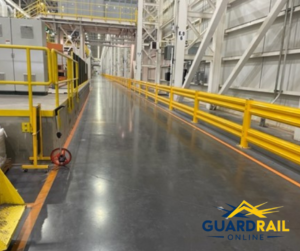
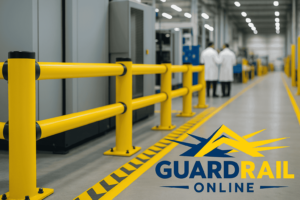
Installing warehouse safety barriers along walkways creates clear separation. It defines where people can move safely without crossing into equipment zones. This reduces hesitation, improves movement flow, and most importantly, prevents collisions before they happen.
2. Around Loading Docks
Loading docks bring together speed, pressure, and movement in one place. Trucks arrive on schedule. Forklifts move continuously. Workers operate close to open edges and active zones. This combination increases risk.
Barriers installed around dock edges and access zones help create a defined boundary. They prevent accidental falls and control where movement should happen. A warehouse guardrail system should also be used here to handle both edge protection and impact resistance. Doing this helps to reduce exposure while keeping operations efficient.
3. Around Machinery Zones
Machinery areas require controlled access. Adding signs here may indicate danger, but they do not stop entry. This is exactly why the need for warehouse safety barriers becomes essential here. This is because warehouses are high-activity zones where workers often step into hazardous zones unintentionally.
Adding safety barriers, however, helps create a physical boundary around equipment. This ensures that only trained personnel can enter these areas. This helps reduce accidental exposure and create a safer working environment around heavy machinery.
4. Along Storage Racks
Storage racks face repeated impact over time. Forklifts often operate close to these structures. This means there are high chances of contact one day or another. So, when a contact happens, it can weaken the system without visible damage. This creates long-term risk.
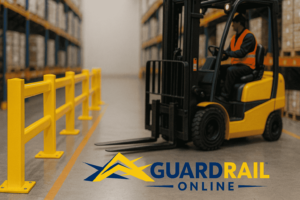
But you can change that by installing warehouse safety barriers along rack zones. These barriers absorb impact before it reaches the structure. It takes the hit instead of your storage system, protecting both your infrastructure and your inventory. It also reduces repair costs and prevents unexpected downtime.
5. At High-Traffic Intersections
Some of the most overlooked risks exist at intersections. These are areas where movement comes from multiple directions. Visibility is also often limited in these zones. Hence, operators and workers may not even see each other in time. This is where confusion turns into incidents.
Barriers placed at these points change that equation. It guides movement and reduces blind spots. Guardrails also create structure in areas that would otherwise feel unpredictable. This improves control and reduces the chances of sudden collisions.
6. Around Restricted Zones
Certain areas in your warehouse should never be accessed freely. This includes chemical storage, electrical panels, and maintenance zones. These spaces require controlled and limited entry.
Without barriers, these areas rely on awareness alone. That, however, is not enough. So, warehouse safety barriers create a clear restriction. They act as both a visual and physical signal that access is limited. This prevents accidental entry and ensures only authorised personnel step into these zones.
7. Around In-Plant Offices and Workstations
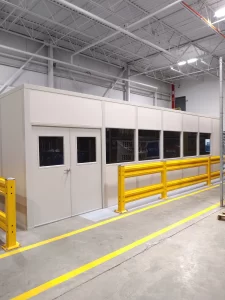
Offices, quality-check stations and packing areas often sit right on the warehouse floor. A guardrail line along their walls and entrances keeps forklifts from striking the structure and the people working inside. Use double height guardrail where people step out next to active traffic.
8. In Front of Electrical Panels and Controls
Electrical panels, control cabinets, sprinkler risers and fire equipment are easy to hit and costly to damage. Single height guardrail in front of them stops low-level impacts. Position it so the clear working space required in front of electrical equipment stays open.
9. At Doorways That Open Into Travel Lanes
People leaving offices, restrooms or break rooms can walk straight into a forklift lane. Guardrail that turns them onto a protected walkway, or a pedestrian safety gate at the opening, makes them pause before entering the aisle.
Frequently Asked Questions
What are the different types of safety barriers?
Guardrails, bollards, safety gates, rack protectors and pedestrian barriers are among the most common. Each is designed to control movement and protect specific areas within a warehouse.
What is 5S safety in warehousing?
5S stands for Sort, Set in Order, Shine, Standardize and Sustain. It is a system for keeping the warehouse organized, clean and safe, and protected walkways fit naturally into it.
What are the main safety precautions for a warehouse?
Separating pedestrian and vehicle paths is one of the most important. Using safety barriers, maintaining equipment and training workers are other key precautions.
Where should I install safety barriers first?
Start where people and forklifts meet most often: walkways beside forklift aisles, intersections and blind corners, doorways that open into travel lanes, and rack ends facing cross aisles.
Do I need barriers around machinery and electrical panels?
Yes, where forklifts operate nearby. A single height guardrail around machinery bases, control panels and electrical cabinets stops low-level impacts that could damage equipment or cause a fire or shock hazard.
Products for Each Barrier Location
For walkways and intersections, use double height guardrail with an adjustable pedestrian safety gate at crossings. Around machinery and walls, single height guardrail is usually enough. Along storage racks, protect uprights and rack ends with our rack protectors.
Conclusion
Warehouse safety improves when protection is placed where it is actually needed. Walkways, loading docks, machinery zones, storage areas, and intersections each carry different risks. Installing warehouse safety barriers in these locations proves to be a game-changer. Adding barriers here does not just add protection but also helps create structure.
So, are you looking to buy quality safety barriers in the United States? Guardrail Online offers solutions built for real warehouse environments. Choose systems that align with your operations and create protection that works every day. Contact Guardrail Online today!
Written by the Guardrail Online team. Reviewed and updated in October 2026.