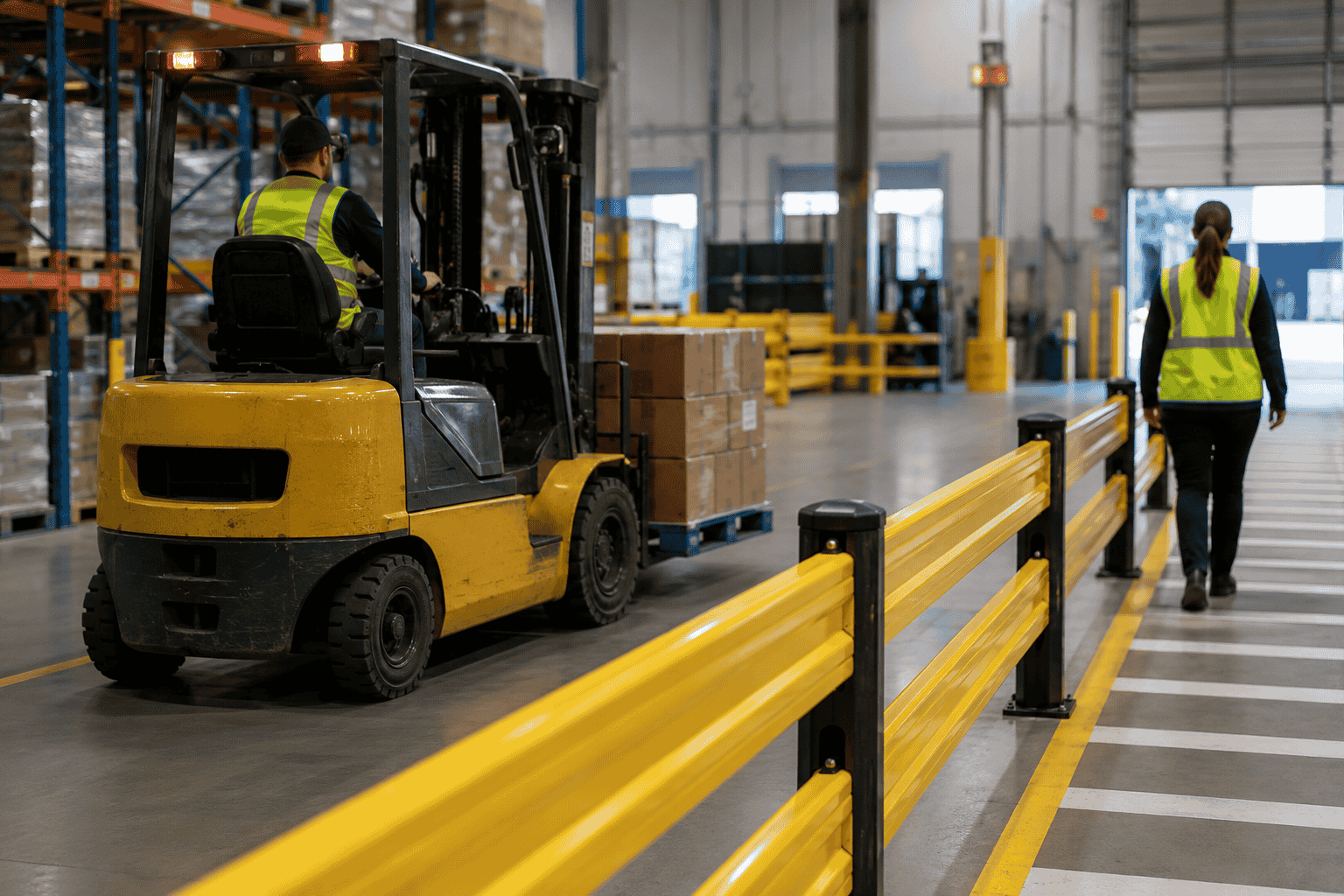
Do you think every warehouse area carries the same level of risk? That’s actually far from true!
Some warehouse zones naturally become more dangerous because of how movement happens within them every single day. Shared forklift and pedestrian areas are a perfect example of this. These spaces experience constant traffic, changing movement patterns, and higher chances of human error. Yet, many facilities continue operating without proper separation in these zones.
This article breaks down why these shared movement areas need protection of warehouse guardrail before anywhere else in a warehouse.
Quick answer: Install warehouse guardrails first in shared zones, where forklifts and pedestrians use the same aisles, turns and crossings. These areas see constant overlap, frequent direction changes and the most near misses. After that, protect walkways that run beside forklift aisles, doorways that open into travel lanes, tight bends, mezzanine exits and machinery zones.
Table of Contents
ToggleKey takeaways
- Shared forklift and pedestrian zones come first.
- Repetition makes people and drivers less cautious in familiar routes.
- Near misses are an early warning of where a serious incident will happen.
- Next priorities: parallel walkways, doorways into lanes, sharp bends, mezzanine exits and machinery.
In this guide
- The First Place You Should Install Warehouse Guardrails
- Why This Area Needs Protection Before Anywhere Else?
- What to Protect Next
- Frequently Asked Questions
- Conclusion
The First Place You Should Install Warehouse Guardrails
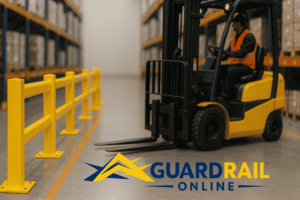
The first location that needs protection of warehouse guardrail is any area where pedestrian movement overlaps with forklift traffic.
You will usually find these zones near loading docks, shared crossing points, blind intersections, and active forklift lanes. These areas experience constant movement throughout the day, which naturally increases the chances of accidents.
Forklifts often turn, reverse, and maneuver through tight spaces in these zones. At the same time, workers move through the same paths while handling daily tasks. This creates a dangerous overlap where even a small mistake can lead to serious consequences.
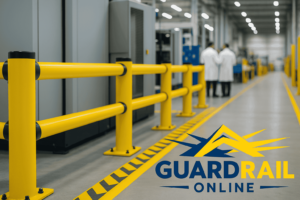
You can, however, strengthen safety in these areas with a properly installed warehouse guardrail system. These safety barriers create a clear physical separation between people and moving equipment. Without them, the movement is often open and unpredictable, causing accidents. However, the presence of heavy duty guardrail helps guide how both pedestrians and forklifts operate within the space.
This is why many facilities operating in high-traffic environments buy guardrails for warehouse first for shared spaces.
Why This Area Needs Protection Before Anywhere Else?
Are you wondering why shared forklift and pedestrian zones require protection before any other warehouse area? The answer lies in how movement happens within these spaces every single day. These zones experience constant activity, limited reaction time, and higher chances of human error. Together, these factors create one of the most accident-prone environments in a warehouse. Here are a few reasons that support this.
1. Forklift and Pedestrian Movement Constantly Overlap Here
Shared forklift and pedestrian zones experience continuous movement throughout the day. Workers cross these areas to access aisles, loading docks, inventory sections, and workstations. At the same time, forklifts move through the same paths while transporting loads across the facility. This constant overlap creates a serious safety challenge.
Forklift operators focus on maneuvering equipment, handling loads, and navigating tight turns. Workers, on the other hand, focus on completing tasks and moving efficiently through the warehouse. When both operate within the same space, the chances of misjudgment increase naturally.
Even a small mistake in these zones can lead to:
- Collisions
- Impact injuries
- Crushed feet
- Workers getting pinned between moving equipment and nearby structures.
A properly installed warehouse guardrail helps reduce this direct interaction by creating physical separation between people and machinery. This lowers exposure to accidents and brings more control to high-risk movement zones.
2. Repetitive Movement Often Reduces Caution in Shared Zones
Shared forklift and pedestrian zones experience continuous movement throughout the day. Workers cross these areas repeatedly to access aisles, loading docks, and workstations. At the same time, forklift operators move through the same routes while transporting inventory across the warehouse. Over time, this repetitive movement creates familiarity.
Both pedestrians and operators become increasingly comfortable using these spaces every day. As this comfort grows, these areas slowly begin to feel less dangerous than they actually are. This is where “assumptions” start replacing caution.
For pedestrians, this often means:
- Assuming forklift operators have already seen them
- Crossing active lanes without stopping properly
- Becoming less alert in familiar crossing zones
For forklift operators, this may mean:
- Expecting pathways to remain clear
- Taking turns with less caution
- Reacting later in familiar movement zones
These behavioral gaps create serious risks on both sides. Even a small lapse in judgment can quickly lead to collisions, impact injuries, or workers getting pinned between equipment and nearby structures. But a properly installed heavy duty guardrail helps reduce these risks drastically.
Warehouse guardrails can create a clear physical separation between pedestrians and forklift routes. This means neither pedestrians nor forklift operators need to depend only on human attention. Instead, they can rely on barriers to protect them. Moreover, it helps managers to control movement and reinforce safer behavior within shared warehouse zones.
3. Shared Zones Experience Constant Direction Changes
Shared forklift and pedestrian zones rarely experience straight and predictable movement. Forklift operators constantly adjust their direction while navigating daily warehouse operations. They:
- Reverse into loading docks,
- Reposition pallets,
- Maneuver around temporary obstacles
- Take sharp turns through active lanes
- The challenge is that these movements can change within seconds
This is exactly why pedestrians moving through the same space can often struggle to predict where equipment will move next. A forklift reversing unexpectedly or turning into a shared lane can quickly create dangerous situations, especially in fast-moving environments. This is where a properly installed warehouse guardrail becomes extremely important. These safety barriers help define how equipment and workers navigate shared areas instead of leaving movement patterns open.
A heavy duty guardrail also helps create safer pathways around constantly changing forklift routes. This improves movement control and reduces sudden interaction between people and machinery. That is one major reason facilities often buy guardrails for warehouse zones with unpredictable traffic movement first.
4. Shared Zones Experience the Highest Number of Near-Miss Incidents
Do you think warehouse accidents happen without warning signs? No, many reports even suggest that smaller “almost accidents” begin appearing in a zone long before a major incident takes place. These situations are commonly referred to as near misses. In fact, did you know shared forklift and pedestrian zones experience these incidents far more frequently than most warehouse areas?
Forklift and pedestrian zones often experience these near misses a lot due to the constant overlapping of traffic. Workers are using these zones to cross through different areas while forklifts continue transporting loads through the same paths. At the same time, operators need to often navigate tight turns, changing directions, and congested movement zones. This creates an environment where small errors happen repeatedly.
A worker may step too close to an active forklift lane. An operator may notice someone crossing only at the last second. In many cases, both sides react just in time to avoid impact. The real problem actually starts when these incidents slowly become normal within the warehouse.
Over time, repeated near misses create a false sense that the area is “manageable” even when the risk continues increasing. This is exactly where warehouse guardrails begin to change the equation. They help reduce uncontrolled interaction between pedestrians and forklifts by creating more structured movement within shared zones. The chances of near misses drastically reduce when you create proper separation using safety barriers.
What to Protect Next
Once shared zones are protected, work through these areas in order of traffic and risk:
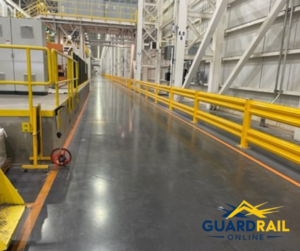
- Walkways running beside forklift aisles: a continuous run of double height guardrail keeps people on the walkway.
- Doorways that open into active lanes: turn people onto a protected walkway or add a pedestrian safety gate.
- Sharp curves and bends: forklifts swing wide on tight turns, so protect the outside of the curve.
- Mezzanine exits and elevated walkways: these may also need fall protection that meets OSHA 29 CFR 1910.29.
- Machinery and process zones: single height guardrail stops impacts at equipment bases.
Once you know where your guardrail should go, follow our step-by-step guide on how to install warehouse guardrail, covering layout, wedge anchors and bolting the rails.
Frequently Asked Questions
Where should I install warehouse guardrails first?
Start in shared zones, the areas where forklifts and pedestrians use the same space. Constant overlap, frequent direction changes and repeated near misses make these the highest-risk areas in most warehouses.
How do I find the shared zones in my facility?
Watch traffic during a busy shift, review near-miss reports and look for physical clues such as scuffed walls, damaged racking and worn floor markings where people and forklifts cross.
What is the height requirement for a guardrail?
Where guardrail is used as fall protection, OSHA 29 CFR 1910.29 requires the top rail to be 42 inches high, plus or minus 3 inches. OSHA does not set a height for floor-level forklift barriers.
Should I use single or double height guardrail in shared zones?
Double height guardrail is the usual choice in shared zones because it gives more coverage and keeps people on the walkway. Single height suits walls, equipment and rack ends.
What are guardrails in a warehouse used for?
Guardrails separate people, vehicles and equipment. They prevent accidental contact that can lead to injuries, damage to stock and equipment, or structural failure.
Products for Your First Guardrail Installation
Most facilities start with a double height guardrail starter kit for high-traffic forklift zones and a single height starter kit for walls and equipment. Where racking meets the aisle, add an end of rack protector and rack column protectors to stop impact damage to uprights.
Conclusion
Shared forklift and pedestrian zones are among the most accident-prone areas in any warehouse. Constant movement, changing directions, near misses, and reduced caution naturally increase the level of risk within these spaces. Installing a properly designed warehouse guardrail system helps create structure, separation, and better movement control where it matters most.
So, why not strengthen these high-risk zones today? Remember, choosing the right guardrail supplier is equally important. This is exactly why many facilities trust Guardrail Online to buy guardrails for warehouse environments that demand reliable and long-lasting protection.
Order your safety system from Guardrail Online today!
Written by the Guardrail Online team. Reviewed and updated in October 2026.