Do you think every warehouse requires the same level of protection? Not really. The actual need for safety infrastructure often depends on one major factor, known as forklift traffic.
Some warehouses operate with limited equipment movement throughout the day. Others experience constant forklift activity across loading docks, aisles, intersections, and storage zones. The latter naturally places far more pressure on both workers and infrastructure. It increases the chances of collisions, repeated impact, and operational damage across high-traffic areas.
This is exactly why busy facilities often require stronger and more strategically placed heavy duty warehouse guard rail beam and safety systems. Let’s understand how forklift traffic impacts your need for better protection.
Table of Contents
Toggle1. More Forklift Movement Creates More Impact Opportunities
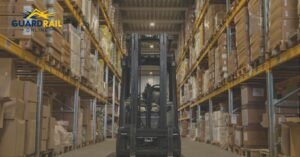
Forklift operators continuously move through loading zones, intersections, narrow aisles, and active warehouse spaces throughout the day. But they are not just moving through these areas empty-handed. In many cases, forklifts carry thousands of pounds of inventory while navigating tight operational environments. Now imagine multiple forklifts operating within the same space, carrying this much weight at the same time.
As forklift traffic increases, so does the number of movement interactions happening throughout the warehouse. Operators begin crossing paths more frequently while moving around racks, infrastructure, equipment, and shared operational zones. This naturally creates more opportunities for sudden contact and accidental impact.
The important thing to understand here is that warehouse damage does not always happen because of one major collision. There may not even be a major collision for months, if not years. The reason for concern here is “repeated low-level contact”. There can often create damage gradually over time, especially in high-traffic zones experiencing constant forklift movement.
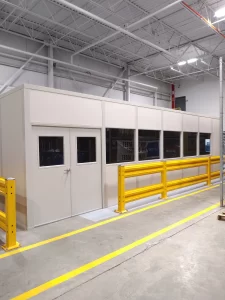
This is exactly where a properly installed industrial guardrail beam becomes a game changer. These barriers would absorb those repeated impacts before it reaches racks, machinery, walls, and other critical industrial structures.
2. More Forklift Traffic Creates Greater Pedestrian Exposure
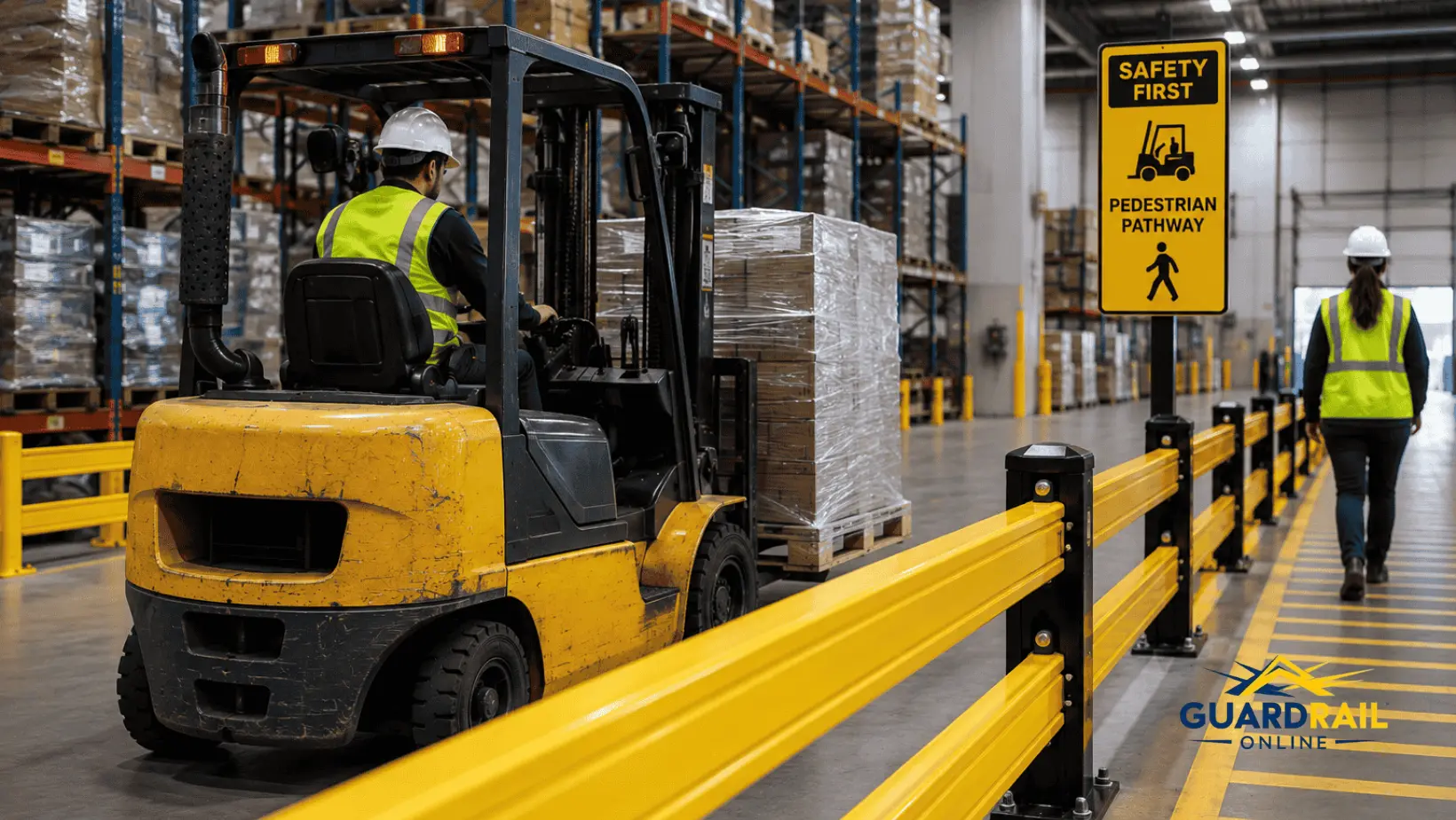
Many warehouses have shared spaces where forklifts and pedestrians use the same operational zones throughout the day. Workers cross active lanes to access aisles, workstations, loading areas, and storage sections while forklifts continue transporting loads through these same spaces.
The problem naturally increases as forklift traffic grows across the facility.
More forklift movement means:
- Greater pedestrian exposure
- Higher chances of unsafe crossings
- Increased interaction between workers and equipment
- Less room for movement errors
Over time, these shared operational zones become significantly more dangerous for workers moving through the warehouse. The risk becomes even greater in busy facilities where forklift operators continuously enter and exit active lanes throughout the day.
This is exactly where stronger protection systems begin changing the equation. A properly installed heavy duty warehouse guard rail beam helps create dedicated pedestrian pathways and stronger physical separation between workers and moving equipment. These physical barriers help control movement more effectively and reduce direct exposure within high-traffic warehouse zones.
3. Constant Traffic Naturally Increases Blind Spot Risks
Forklift operators are expected to stay aware of everything happening around them while moving through the warehouse. However, this becomes much harder in facilities with constant forklift traffic.
The reason is simple. Busy warehouses experience movement from multiple directions at the same time. Forklifts continue entering aisles while workers, pallets, and equipment move through nearby spaces simultaneously. As traffic increases, operators need to monitor several movement points together. This creates moments where certain areas temporarily move out of sight, especially near intersections, racks, and turning zones.
These visibility gaps are what create blind spot risks in your industrial space. An operator may fail to notice movement happening beside a rack or near the edge of an active lane until it is too late to react safely. This is exactly why high-traffic warehouses require stronger protection around movement-heavy areas.
A properly installed heavy duty warehouse guard rail beam becomes indispensable here. It would help reduce direct exposure in these zones by creating safer separation between forklifts and surrounding operational spaces.
4. Busy Forklift Routes Create Higher Chances of Infrastructure Damage
Forklift routes are usually planned around the most active parts of a warehouse. This means forklifts continue operating close to rack ends, dock doors, support columns, conveyor systems, charging stations, and production machinery throughout the day.
Now, think about what happens when forklift traffic begins increasing around these structures. More movement naturally creates more opportunities for accidental contact near critical infrastructure. A small turning error, delayed reaction, or tight maneuver near these areas can quickly result in direct impact.
The problem becomes even more serious because these structures are not just ordinary warehouse assets. They often support operations, inventory flow, and structural stability across the facility. This means even a single forklift collision can:
- Damage expensive inventory
- Interrupt warehouse operations
- Create structural safety concerns
- Lead to costly downtime and repairs
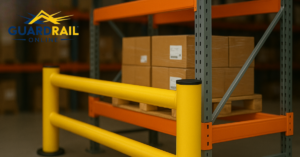
This is exactly why infrastructure protection becomes far more important in high-traffic industrial zones. A properly installed heavy duty warehouse guard rail beam helps absorb impact before collisions reach critical operational structures.
5. High-Traffic Warehouses Leave Less Time to React
Forklift operators constantly make quick decisions while navigating through active industrial environments. They manage loads, turns, surrounding traffic, and changing movement conditions throughout the day. However, the equation changes significantly when forklift traffic begins increasing across the facility.
The reason is simple. More forklift activity creates more movement interactions within the same operational space. Operators begin encountering more:
- Turning equipment
- Crossing movement
- Shared lanes
- Congested zones within shorter periods of time
This naturally reduces the amount of time available to react safely when unexpected movement happens nearby. Even experienced operators may struggle to respond quickly in environments like these, where traffic conditions change continuously.
This is exactly why stronger protection becomes necessary in high-traffic warehouse zones. A properly installed heavy duty warehouse guard rail beam helps create safer movement boundaries in areas like these. They reduce the need for reliance on quick reactions and prevent collisions, infrastructure impact, or dangerous near misses.
Conclusion
Forklift traffic does not just increase movement within a warehouse. It slowly changes how risk develops across the entire facility. As equipment activity grows, warehouses begin experiencing more pressure on movement zones, infrastructure, and shared operational spaces. This naturally increases the chances of collisions and uncontrolled movement in industrial areas.
But everything changes with the right placement of high impact guard rail beam for industrial use. These safety barriers increase protection, take the hit, and allow better movement. So, why not install heavy duty warehouse guard rail beam from Guardrail Online today?
Explore our range of safety barriers and industrial guardrail beams today!