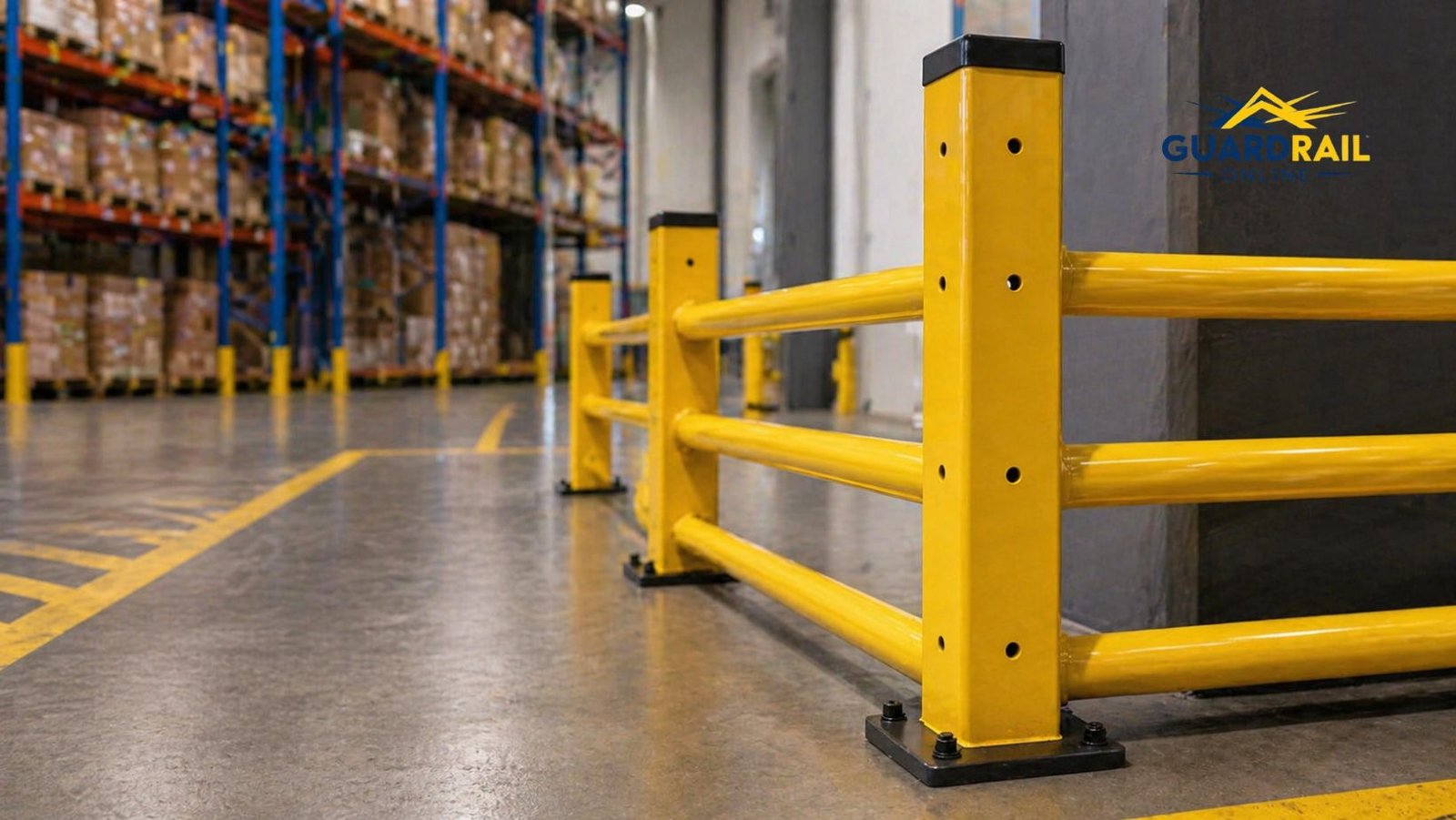
More and more warehouses in the United States are investing in guardrail systems to improve safety and structure. However, many overlook one critical detail: the posts of a warehouse guard rail system. These may appear less important at first, but they directly influence how well the system performs under impact and protects your space.
Are you planning to install guardrails in your facility? Then choosing the right posts becomes just as important as selecting the rails themselves. This is where many decisions become unclear.
If you are unsure what to consider, this article breaks it down for you. It explains how to choose the right guardrail posts based on your layout, risks, and daily operations.
1. Start with the Purpose of Protection
Every warehouse operates differently, and so do its risk zones. Some areas only need basic separation, while others require strong impact protection. This is why you need to understand the purpose behind your safety setup first.
Are you trying to guide pedestrian movement along walkways? In such cases, lighter guardrail posts are often sufficient. These are typically slimmer and designed to handle low-impact situations where the goal is direction.
However, the approach changes when you are protecting machinery, storage racks, or critical infrastructure. These areas face higher impact risks, especially from forklifts and heavy equipment. Here, you’ll need thicker, reinforced guardrail posts that can absorb and withstand force.
The effectiveness of your warehouse guard rail system depends on this decision. Hence, the posts you choose must align with the level of protection required, not just the layout of your space.
2. Understand Your Layout and Dimensions
Once you are clear on the purpose, the next step is understanding how protection will fit into your space. Remember, every warehouse layout is different. This means your approach cannot be generic.
Start by measuring the areas that need coverage. As you do this, look closely at how movement actually happens within the facility. Notice the length of your aisles, the points where people and equipment enter or exit, and the zones where traffic tends to build up. These details help you understand where protection needs to start, continue, and change direction.
Want to enhance protection around longer runs? Posts here must be placed at consistent intervals to maintain strength across the entire stretch. However, remember that a warehouse is rarely linear. Corners, turns, and intersections require more careful positioning. Pay attention to these spaces so the system remains connected and stable throughout.
Height must also be considered at this stage. Warehouse guard rails need to sit within a specific range to provide effective protection. Your posts should support that height consistently across every section.
3. Evaluate Equipment and Traffic Movement
Once your layout is clear, shift your focus to how movement actually happens within your warehouse. The type of equipment in use and the speed at which it operates will directly influence the kind of posts you need.
Start by assessing your daily operations. Are forklifts moving at moderate speeds, or is the environment fast-paced with constant traffic? Standard guardrail posts may be enough in lower-impact settings to manage occasional contact.
However, the situation changes in high-traffic zones. Heavy forklifts, frequent turns, and tight maneuvering increase the chances of repeated impact. You need reinforced warehouse guard rail posts in such areas. Here, you need posts that are thicker, stronger, and built to absorb force without failing.
4. Factor in Environmental Conditions
Many managers ignore the significance of environmental conditions when finalizing warehouse guard rail posts. However, it is in fact crucial if you care about the durability of your safety barriers.
Most warehouses operate under stable indoor conditions. However, some spaces do introduce challenges that cannot be ignored. Take cold storage areas, for example. Low temperatures can change how materials respond to impact. Certain metals may become brittle here, while some polymers may lose their ability to absorb force effectively.
Does your facility include such zones? Then, your warehouse guard rail system must be chosen with these conditions in mind. This is where experienced guard rail suppliers add real value. They can guide you toward materials and designs that perform reliably, even in extreme environments.
Choosing the right components would ensure your protection remains consistent, no matter where it is installed.
5. Anticipate Impact Zones and Heights
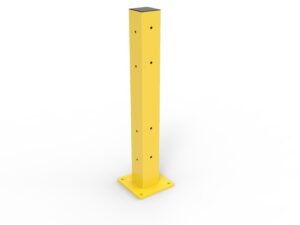 Different areas within a warehouse face different levels of risk. Some zones see frequent collisions, while others experience minimal contact. This is exactly why you need to study these areas before selecting your guardrail posts.
Start by identifying where impacts occur most often. Look at turning points, loading zones, and areas near storage racks. These spaces usually face repeated contact from forklifts and moving equipment.
Now, focus on the height of these impacts. Lower-level collisions from counterweights require posts that support strong, low-positioned rails. On the other hand, areas exposed to raised forks or stacked loads need taller posts. These include double-height posts that extend protection to mid or upper levels.
This is where your choice becomes critical. Standard-height posts may work in low-risk zones, but high-impact areas demand taller and reinforced posts. When aligned correctly, your warehouse guard rail system protects each zone based on its actual risk, not assumptions.
6. Match Posts with Guardrail Types
Every guardrail system is built differently. Each has a different role and places different demands on its supporting posts.
Start by identifying the guardrail type in each area. For example, single-rail systems used for guiding movement require posts that can support alignment and stability. The same is not the cause of double-rail or impact-resistant systems. These need stronger, thicker posts that can handle force and distribute impact effectively.
The connection between the rail and the post also matters. Posts must be designed to fit the specific guardrail system you choose. After all, mismatched components can weaken the entire structure.
Work with experienced guard rail suppliers to ensure the right fit. Choose guard rail suppliers who provide compatible systems.
Conclusion
Choosing the right guardrail posts is not just about selection. It is about understanding how your warehouse operates and where protection is truly needed. Each decision, from layout to impact zones, plays a role in how well your system performs.
This process becomes far more effective when you work with experienced guard rail suppliers. The right guidance from these providers ensures every component fits, functions, and performs as expected.
If you are looking to build a reliable warehouse guard rail system, Guardrail Online offers solutions designed for real industrial environments. Explore our solutions today.
FAQs
What is the purpose of a guard rail?
A guard rail is used to prevent accidents by creating a protective barrier between people, equipment, and hazards. It helps control movement and reduces the risk of collisions and falls.
What are the types of guardrails?
Three main types of guardrails include single-rail systems, double-rail systems, and impact-resistant barriers. Each of these guardrails is designed based on the level of protection and the environment in which it is used.
What is the difference between guard rail and rail?
A rail is simply a horizontal bar or structure. A guard rail, on the other hand, is a complete safety system designed to protect against impact or falls.