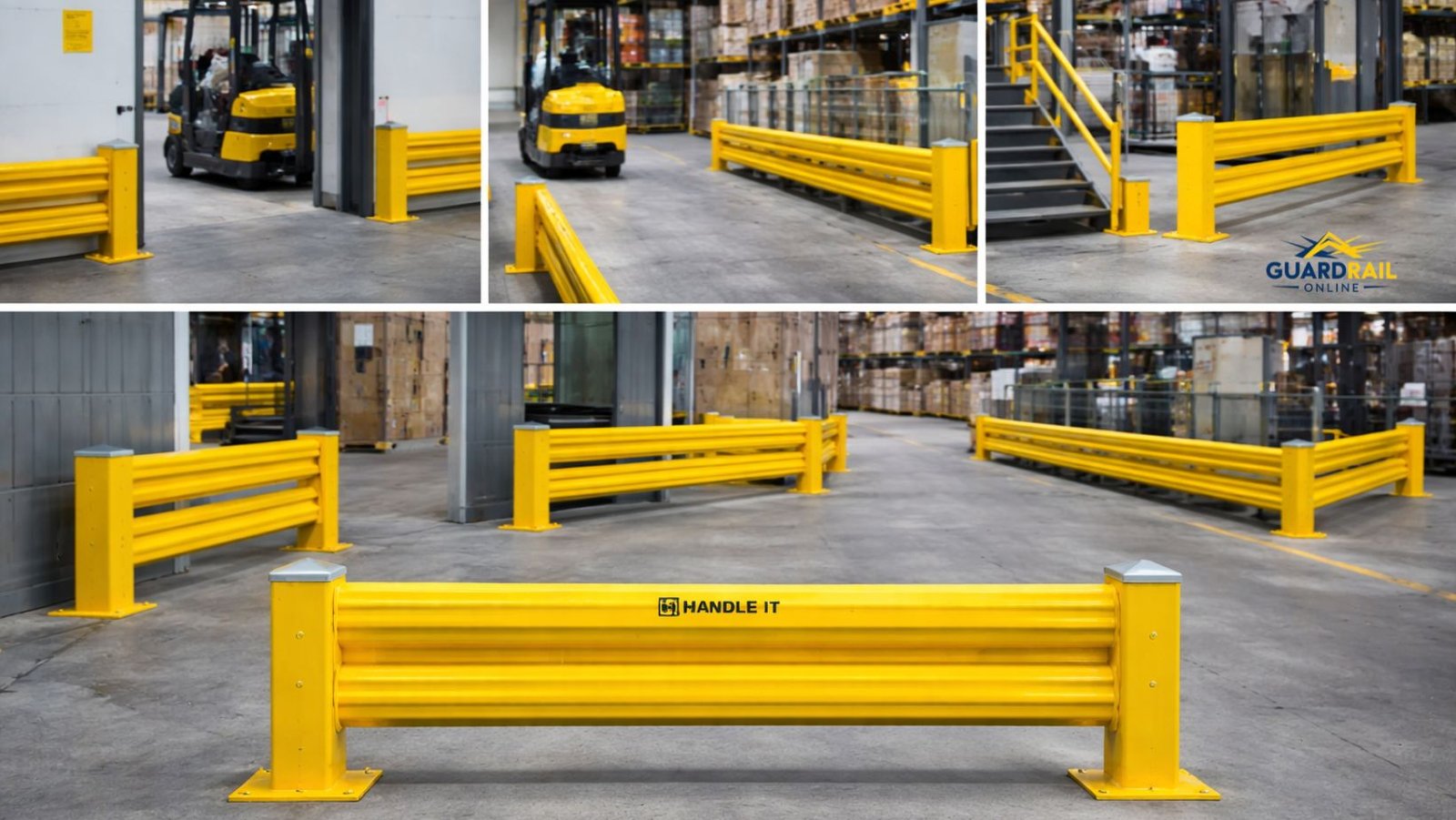
When a warehouse is new or expanding, safety planning often runs up against budget reality. Installing physical barriers everywhere at once is rarely practical in such situations. However, that does not mean protection should be delayed. The real decision is not whether to protect, but where to protect first.
Some walkways carry far more risk than others due to traffic patterns, visibility, and exposure time. The challenge is identifying which zones demand physical protection immediately, and which can follow later.
This article breaks that down clearly. We are here to help warehouse managers prioritize high-risk areas where guardrails deliver the greatest safety impact early, even with limited resources.
Table of Contents
Toggle1. Walkways Running Parallel to Forklift Aisles
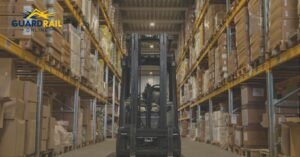
Parallel walkways are where pedestrian risk quietly accumulates. These routes are used all day, often running alongside active forklift aisles where equipment moves back and forth without pause. Pedestrians are not merely crossing traffic here. They are walking beside it, sometimes for long distances, while forklifts accelerate, brake, correct their line, or adjust for load overhang.
A single misjudgment is enough to cause a serious accident in these zones. All it takes is a forklift to drift slightly during a turn, a pallet to extend wider than expected, or a pedestrian to step closer to the aisle to pass an obstacle. One move and you may be left with a damaged forklift, machinery of a serious accident, leading to even a loss of life.
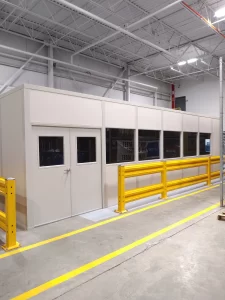
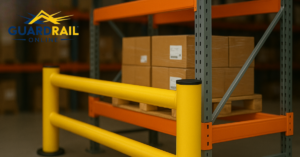
This is why parallel walkways are among the first locations that require physical protection. Installing a single height warehouse guard rail starter kit along these routes creates immediate, continuous separation. It establishes a clear physical boundary without overbuilding the area. Installing warehouse guardrails in these areas allows facilities to control risk early, without committing to large-scale changes all at once. This approach works especially well when protection is being introduced in phases or tested across selected sections of the floor.
2. Doorways That Open Directly Into Active Forklift Lanes
Many facilities assume visual controls are enough in these areas. Painted floor markings may indicate a crossing. Mirrors may be installed to improve visibility. In theory, this should help pedestrians and operators coordinate. In practice, however, it relies on both of them noticing the cue at the exact right moment. So, when attention slips, even slightly, the doorway becomes a high-risk release point into live traffic.
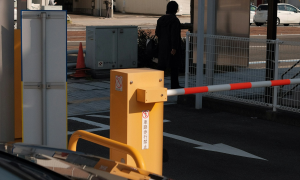
Physical protection changes that dynamic. A short run of guardrail placed outside the doorway creates a buffer that forces a pause before entry. It improves sightlines, slows movement, and separates foot traffic from forklifts until awareness is restored. This is why doorways like these are often among the first locations where a single height warehouse guard rail starter kit makes sense. Here, the risk is not spread across a wide area. It is focused at a single release point. Movement follows the same patterns every time. That predictability is exactly why ordering warehouse safety guard rail kit online and installing it here can be effective.
3. Sharp Curves and Bends in Forklift Travel Paths
Sharp curves are where forklift movement changes most abruptly.
- Speed drops.
- Steering input increases.
- Rear swing widens.
- Loads shift outward.
In these zones, forklifts are no longer moving in a straight, predictable line. They are correcting, adjusting, and compensating for space, load size, and visibility all at once.
This creates a hidden danger for pedestrians. A person walking near a bend may believe they are clear of traffic, only for the rear of a forklift or an overhanging pallet to sweep wider than expected. Unlike straight aisles, these incidents rarely happen head-on. They occur at angles, during corrections, and with very little warning.
This is why sharp curves and bends are often among the first places where physical protection is needed. Visual cues do little here because movement is dynamic, not linear. A continuous physical boundary is what prevents forklifts from drifting into pedestrian space when steering geometry changes.
Installing a single height warehouse guard rail starter kit along tight curves introduces that control without redesigning the aisle. Ordering a warehouse safety guard rail kit online for these bends is a practical way to address real exposure quickly and consistently. This is especially true for facilities prioritizing high-risk zones first, or those rolling out protection in stages.
4. Elevated Walkways and Mezzanine Exit Points
Elevated walkways and mezzanine exits typically sit 900 mm to 1.2 meters (3–4 feet) above the warehouse floor. That height may not seem significant, but it changes how people move and what they notice. Pedestrians step down, adjust balance, and refocus their vision just as they re-enter an area where forklifts are already in motion.
That moment of transition is where risk concentrates. Forklift traffic does not slow because someone is descending a stair or ramp. Operators are bound to stay committed to their path. Pedestrians, meanwhile, are focused on footing and direction, not on judging speed or clearance. A single step forward during such movement can place them directly into an active lane.
This is why mezzanine exits are priority locations for physical protection. Installing a single height warehouse guard rail starter kit at the bottom of stairs or ramps creates a controlled release point. These exits are fixed, predictable, and short in length. That makes them ideal for starter kits, where limited sections of protection deliver immediate control without unnecessary complexity. Installing guardrails here prevents direct step-outs, channels pedestrians into a defined path, and restores awareness before interaction with equipment occurs.
5. Near Hazardous Processes and Active Machinery Zones
Areas surrounding hazardous processes demand a different level of attention because the margin for error is already thin. These zones often sit near
- Conveyors,
- Pallet wrappers,
- Stretch machines,
- Charging stations, or
- Automated equipment
Movement is constant, and tolerance for intrusion is low in all these regions. Pedestrians pass through these areas as part of routine tasks, often while focusing on production, not proximity.
The risk here is not only about vehicle contact. It is about what happens if a person is pushed, startled, or forced to step aside. A momentary distraction can place someone into a machine’s operating envelope with no time to recover. Even minor contact in these zones can escalate quickly into serious injury or equipment damage.
This is why hazardous process areas are often prioritized early for physical separation. A physical barrier can help establish a fixed boundary in these zones. It ensures that people do not cross them casually and forklifts cannot drift through accidentally.
Installing a single height warehouse guard rail starter kit around these processes creates a defined buffer without overcomplicating access. These areas are typically fixed, short in length, and consistent in layout, which makes starter kits a practical choice. Ordering a warehouse safety guard rail kit online for these zones allows facilities to introduce protection quickly, contain exposure where consequences are highest, and build safety outward from the most critical zones first.
Conclusion
Prioritizing the right walkways first is a smart way to control risk when budgets are tight. But pedestrian exposure does not disappear elsewhere. As operations grow, traffic increases, and layouts evolve. So, physical protection should expand with them.
Accidents can happen anywhere, but well-placed guardrails consistently reduce their severity and likelihood. That is why delaying protection rarely pays off. So, warehouse managers should plan ahead and invest in high-quality single height warehouse guard rail starter kit that can scale over time. Guardrail Online offers such durable, reliable starter kits designed to protect critical zones today and support safer expansion tomorrow. Explore our range of products online now.
FAQs
What is the height requirement for a guard rail?
The top guard rail is typically required to be around 42 inches (±3 inches) in most industrial and workplace settings. This is measured above the walking or working surface. However, remember that the requirements depend on applicable safety standards.
What is the minimum height for a top guard rail on scaffolding?
For scaffolding, the top guard rail is generally required to be at least 38 inches high. However, the minimum height still varies, as many standards specify a range between 38 and 45 inches for compliance.
What are guard rails in a warehouse used for?
Guard rails in a warehouse are used to separate people, vehicles, and equipment. They are installed to prevent accidental contact that can lead to injuries, asset damage, or structural failure.