Warehouse barriers in Oklahoma do more than occupy floor space. They actually serve as silent guardians of every busy facility. These systems prevent costly collisions by clearly marking restricted zones and protecting critical assets. No warehouse manager today would question their value. Instead, they rely on forklift barriers to reduce damage, avoid downtime, and keep employees confident in their surroundings.
However, simply buying forklift barriers in Oklahoma is not enough. Proper installation of these safety systems is equally important. Barriers can become ineffective or even introduce new hazards without the right placement, anchoring, and visibility measures. On the contrary, right installation ensures barriers perform exactly as intended, year after year.
But installing warehouse barriers in Oklahoma are more complex than simply setting steel posts. Soil conditions, concrete quality, traffic patterns, and facility layout can influence performance. Ignoring any of these factors can lead to uneven protection, weak anchoring, or obstructed pathways. Dealing with these challenges head-on can stress you out but finding the right guide to installation can prove highly beneficial. This article achieves to deliver just that.
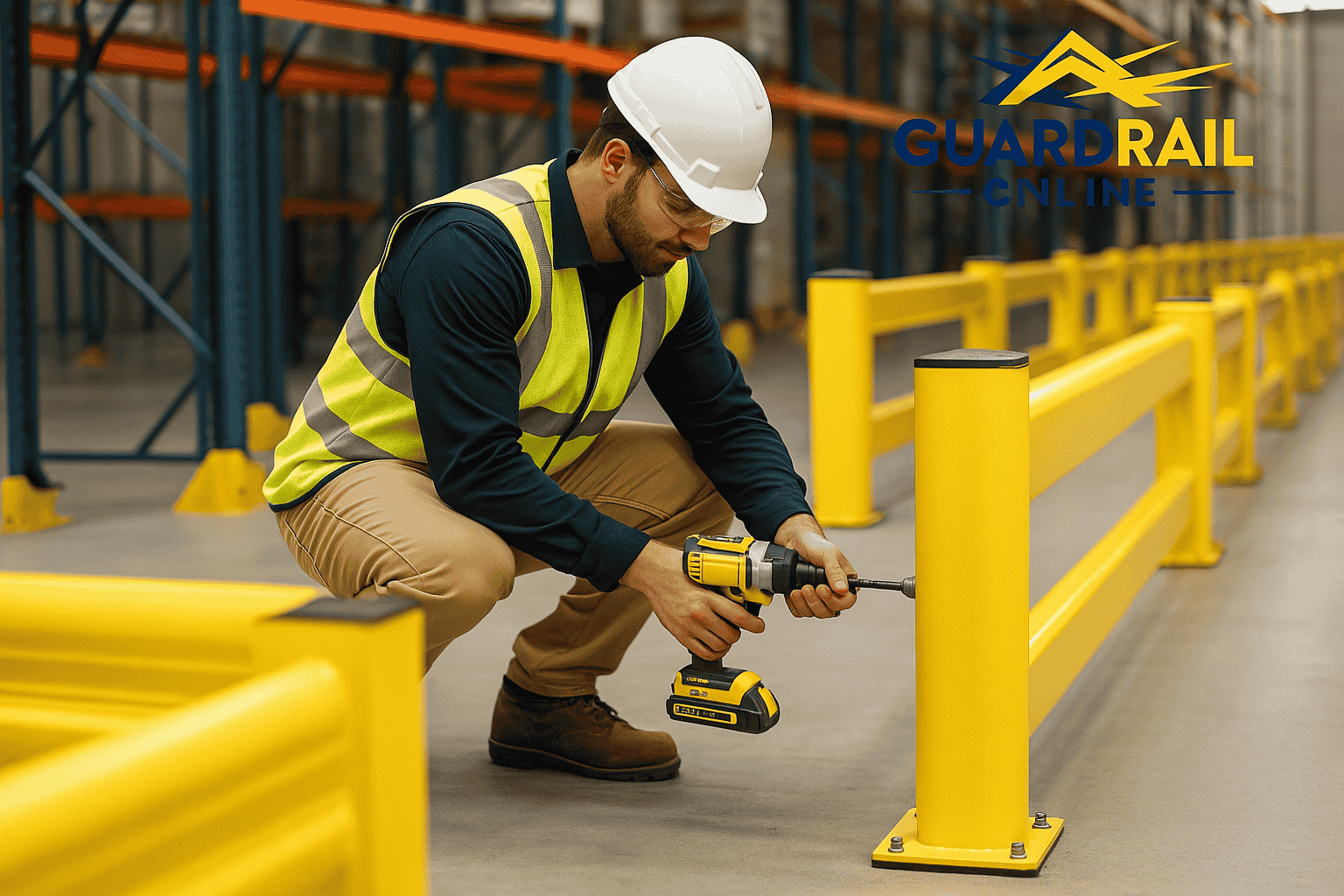
This step-by-step guide walks you through each stage of proper barrier installation. You will avoid hidden errors and eliminate costly rework by following these proven best practices.
Table of Contents
Toggle1. Conduct a Site Safety Audit
Any good installation begins with conducting a thorough audit of a site. Hence, you must first assess, analyze, and pinpoint areas where collisions are most likely to occur. Start by observing your facility during peak activity. Trace every forklift route, pedestrian walkway, loading dock, and blind spot. Look through past incident reports and near-miss logs to pinpoint hotspots where damage has occurred or could occur. Use floor markings, cameras, or simple chalk lines to map these areas on a scaled diagram of your warehouse. Do not forget to interview operators and warehouse staff. They often know trouble spots that data alone may miss.
Next, classify risk zones by frequency and severity of potential incidents. Highlight zones by their risk level. Mark out red for high-risk areas like dock edges and narrow corners, yellow for moderate-risk pathways, and green for low-risk zones. This targeted assessment ensures barriers go only where they’re needed most, preventing over-installation and wasted budget. Finally, document your findings in a formal audit report that includes photographs, annotated maps, and prioritized recommendations. This audit not only guides placement of warehouse barriers in Oklahoma. It also provides a baseline that can be used by you to measure safety improvements over time.
2. Choose the Right Barrier Type
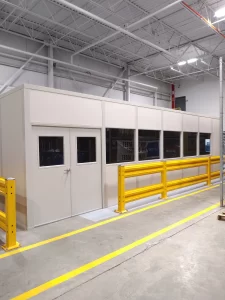
Selecting the right type of barrier is as important as deciding where to install it. But there are various factors one must consider before purchasing warehouse barriers in Oklahoma. Different zones in your warehouse demand different solutions. The material choice of barriers will also influence the performance and maintenance of your forklift barriers. For instance, steel bollards are an ideal choice for perimeter protection because these can help guide forklifts away from building walls. Their compact design and heavy-duty construction can deflect forklifts and other vehicles efficiently without occupying a lot of aisle space.
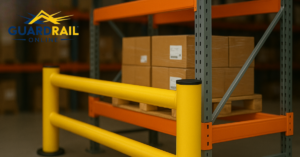
Reinforced guardrails on the other hand can be the right choice to be installed in high-traffic aisles. These safety systems offer continuous protection for racking systems. Look for guard rails in The United States with a steel-reinforced core and a polymer outer layer that absorbs impact and reforms shape.
Loading docks are among the most accident-prone areas that present unique fall-off risks. Dock edge barriers, bolted flush at the dock’s edge, can however prevent forklifts from rolling forward. These areas can benefit from forklift barriers engineered for precise edge alignment. Such warehouse barriers in Oklahoma can block wheels without obstructing pallet loading.
But wait, you must also consider environmental factors when choosing barriers for your warehouse. Chemical storage zones may demand corrosion-resistant polymers. Outdoor yards on the other hand can benefit from galvanized steel to resist rust. Finally, make sure to consider maintenance needs too. Polymer-coated barriers often resist scratches and require less repainting over time. Keeping all this in mind and matching barrier design plus material to the needs of each zone will help optimize safety ROI and minimize lifecycle costs.
3. Ensure Proper Anchoring
A barrier may be well-designed, however it will always end up being only as strong as its foundation. Many barriers do not fail because of poor design but due to improper anchoring. This is why proper and efficient designing is required to ensure enhanced protection out of your warehouse barriers in Oklahoma.
Improper anchoring can lead to barriers pulled loose, creating dangerous gaps. To avoid this, always use heavy-duty anchor bolts embedded deep into reinforced concrete. It is always advised to follow manufacturer guidelines carefully. Check their guides for bolt diameter, embedment depth, and torque specifications. Following these guides properly would ensure enhanced load resistance that matches barrier ratings.
Inspect the concrete substrate before drilling. Look for expansion joints, utility conduits, or weakened areas that could compromise anchoring strength. If the concrete shows signs of cracking or spalling, repair it first using a high-strength epoxy mortar or full-depth patch. This helps to create a solid base. Once anchors are in place, apply corrosion-resistant coatings or shielding plates around the bolt heads to prevent moisture penetration and chemical damage.
But your job does not end with installation of forklift barriers in Oklahoma. You must also conduct a “pull-test” on a sample anchor to verify load resistance meets or exceeds the barrier’s rated capacity. Moreover, you will be required to conduct annual maintenance. Make sure to re-torque the bolts and check for any movement or corrosion during these routine checks. Proper anchoring will ensure that your barriers remain immovable, even under the harshest impact conditions. This would preserve both barrier integrity and workspace safety.
4. Maintain Adequate Sight Lines
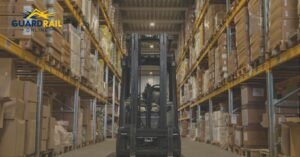
A barrier that obstructs visibility can sometimes cause more harm than good. Therefore, you must view each barrier from an operator’s eye level within a forklift cab when installing warehouse barriers in Oklahoma. Do you see a barrier blocking the line of sight around a corner or over a load? Do not ignore it, instead make sure to reposition the barrier slightly or add visual aids.
Colours play an important role in maintaining visibility. Using contrasting colours such as safety yellow with black striping can help barriers stand out. Moreover, reflective tape or embedded glass beads can further enhance visibility under low lighting or in shaded corners. You can also consider supplementing barriers with convex safety mirrors at key intersections. These inexpensive mirrors will give drivers advance warning of oncoming vehicles or pedestrians. You can also install overhead LED lighting to further illuminate dark zones around high racks.
Consider installing low-level pathway lights along barrier tops or edges around the For pedestrian routes. These could help in guiding foot traffic safely at all hours. Finally, make sure to keep the top of warehouse barriers in Oklahoma clear of dust and debris by scheduling regular cleaning. A freshly painted or cleaned barrier is always far easier to spot than one coated in grime. You empower operators and pedestrians to navigate confidently by preserving clear sight lines. This helps to reduce reaction times and prevents collisions.
5. Regular Inspection and Repair
Even the most durable barriers will develop cracks, dents, and signs of wear over time. Hence, it is crucial to implement a quarterly inspection routine for warehouse barriers in Oklahoma. These inspections analyse every part and inch of barriers. Look for dents that exceed manufacturer-specified deformation limits. Moreover, check for cracks in polymer coatings or welded joints. Use a straightedge or laser level to measure any differences from original alignment. Check the bollards and confirm they remain perfectly vertical. Any downward tilt or bend would suggest anchor failure, requiring repairs or replacements.
Document all your findings with photos, dates, and detailed notes. Moreover, arrange immediate repair or segment replacement for damages that go beyond minor surface scratches. It is advised to not delay repairs until the next scheduled check.
It is also advised that managers keep a functioning inventory of spare anchors, polymer sleeves, and rail sections to ensure swift turnaround. This could prevent any downtime and allow you to take immediate actions when required. Make sure to conduct a low-speed impact test on your barriers after each repair. This would help guarantee that the barriers are restored to deliver optimal performance. This proactive maintenance practice would help ensure there are no protection gaps in your barrier system, maintaining continuous defence against forklift impacts.
6. Integrate Training and Signage
Barriers alone cannot enforce safety. People must understand the purpose of warehouse barriers in Oklahoma, too. Therefore, it is crucial to develop a training program that walks forklift operators and pedestrians through barrier locations, proper routes, and dos and don’ts. Conduct on-floor drills showing how barriers channel traffic and prevent falls or collisions. You shall also pair training with durable signage such as high-visibility signs reading “Pedestrian Zone,” “Forklift Route,” or “Slow Down.”
Floor markings can further complement physical barriers and signage. Opt to use durable vinyl or epoxy-based paints to create coloured paths for foot and vehicle traffic. Ensure these lines run parallel to guardrails and lead into and out of protected zones. Moreover, include arrows, speed limits, and stop lines to reinforce standard operating procedures.
Do not forget to regularly clean signage and floor markings to maintain clarity. It is wise to combine this with periodic refresher training sessions for workers. These sessions should particularly be held after layout changes or following an incident to keep safety top of mind. Compliance becomes second nature when your team understands the intent and purpose of warehouse barriers in Oklahoma. This ensures that these physical systems works in harmony with human behaviour.
7. Review After Incidents
No safety system can ever be foolproof. Hence, when a collision or near miss accident does occur, treat it as a valuable learning opportunity. Assemble a review team of safety managers, operations leads, technicians, and involved staff. Analyse surveillance footage, interview witnesses, and inspect damage patterns on vehicles and warehouse barriers in Oklahoma. Was the barrier positioned correctly? Did material choice or height contribute to the incident? Did operator speed exceed recommendations?
Document your findings in a formal incident report, and translate lessons learned into action items. You might need to adjust placement of safety barriers to account for newly identified blind spots, switch to a tougher polymer composite, or adjust speed limits in certain zones. Update your site safety audit and train personnel on any revised protocols again. It is also crucial to immediately inspect similar barrier segments for potential vulnerability. You strengthen your barrier network methodically by closing this feedback loop. Over time, these periodic adjustments make your barrier system stronger, smarter, and more in tune with real-world operations.
Conclusion
Installing warehouse barriers in Oklahoma are more than a construction project. It is a strategic investment in workplace safety, efficiency, and peace of mind. By rigorously applying these seven best practices, you transform forklift barriers from static hardware into a dynamic safety network. This holistic approach ensures your barriers deliver uninterrupted protection, reduce accidents, and support a thriving, safety-focused workplace.
However, you cannot just use any guard rails or warehouses barriers. You need a strong, durable and a dynamic protection system that adapts to evolving risks. Guardrail Online specializes in delivering such top-quality barriers across the United States. Our expert team is here to answer your queries and deliver robust systems for your space.
Don’t leave your facility’s safety to chance. Partner with Guardrail Online today and transform static hardware into a resilient safety network that protects your team, safeguards your assets, and empowers your business to thrive.