Pallet racking carries the weight of your warehouse operations quite literally. It holds inventory, supports workflow, and determines how smoothly products move across the floor. But here is something many facilities discover only after a costly incident. Pallet racks are far more vulnerable than they appear. A single forklift bump at the wrong angle can bend a frame, misalign a row, or trigger a chain reaction that risks both safety and product integrity.
However. the good news is that most rack damage is preventable with the right planning and the right physical protection. Warehouses can extend rack life, avoid emergency repairs, and maintain safer daily operations with throughtful decisions and protection solutions.
Let’s walk through practical, proven ways to protect your pallet racking systems and reduce the chances of avoidable impacts.
Table of Contents
Toggle1. Strengthen Vulnerable Rack Ends
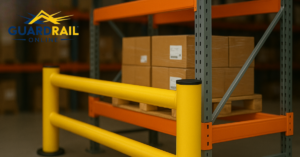
Rack ends face the highest collision risk because they sit directly in forklift turning paths. These blind corner moments are where most impacts occur. Installing physical barriers around these points is one of the most effective steps you can take.
Facilities often use warehouse railing here because it acts as a visible guide and a physical shield. When a forklift comes too close to pallet racking, the rail absorbs the hit instead of the rack taking damage. That simple separation keeps structural frames secure and prevents costly repairs.
2. Add Column Protectors and Rack Guards
While end guards defend the perimeter, individual uprights still need protection. These uprights can be struck during pallet placement or equipment movement inside aisles. Column protectors when placed around them would wrap tightly around rack posts. These column protectors will then stand as the first line of defense against low-speed contact.
Rack guards would reinforce the lower beam level and protect against scraping or pallet impact. When combined with warehouse railing, these systems would form a layered defense that strengthens rack stability from every angle.
3. Maintain Clear and Predictable Traffic Routes
Confusion on the warehouse floor leads to accidents. When aisles are not clearly defined, forklifts drift closer to racks than they should. Marked paths, signage, and mirrors help, but physical separation offers the highest level of control.
Installing warehouse railing along busy movement lanes would guide drivers and prevent tight turns from becoming costly mistakes. It will also give pedestrians safe spaces to travel without stepping into equipment zones.
4. Prioritize Operator Training
Even the strongest safety barrier cannot fix unsafe driving habits. However, regular forklift training helps improve speed control, sharpens awareness around rack edges, and reduces risky maneuvers.
When training is supported by systems such as warehouse railing, behavior improves naturally. The combination of awareness and physical guidance then reduces collision frequency and reinforces safer daily habits.
5. Inspect Racking Structures Regularly
Rack damage is not always obvious right away. Small bends, loosened bolts, or subtle frame shifts can weaken capacity over time. Routine inspections help catch these problems before they turn into hazards.
Make it a habit to check beams for alignment, look for signs of pallet contact, and monitor for corrosion or anchor loosening. Strong protective measures such as warehouse railing extend the life of racking, but inspections ensure long-term resilience.
6. Use Heavy-Duty Protection in High-Traffic Areas
Dock zones, staging lanes, and battery-charging locations experience harder and more frequent collisions. These areas would benefit from reinforced guarding and double-rail configurations designed to absorb stronger impacts.
Facilities should choose warehouse railing in heavy-duty formats here to provide consistent, reliable protection. Doing so stregthens safety many folds.
7. Choose Modular Protection That Grows With Your Layout
Warehouses rarely stay the same. New equipment arrives. Aisles shift. Automation expands. Safety systems must adapt rather than restrict progress. Modular warehouse railing would make these adjustments simple. It can expand or relocate without dismantling the entire barrier line, allowing safety to scale naturally with your operations. Protection should stay flexible, not fixed and modular safety barriers offer just that!
Conclusion
Protecting pallet racking is not just about preventing damage. It is about protecting people, preserving inventory, reducing downtime, and supporting smoother daily movement. Accidents become less frequent and operations stay stable with strategic planning, intelligent traffic control, and dependable physical protection.
So, why not enhance safety through smart planning. Installing top quality safety barriers and warehouse railing systems are a crucial part of such a smart planning. So, why not include them by purchasing the most durable, strong, and efficient safety systems from Guardrail Online?
Protect your pallet racks before a collision teaches the lesson for you. Order barriers made from heavy-duty steel and engineered for long-term reliability from Guardrail Online today!