Do you want to improve pedestrian safety in your warehouse but are unsure where to start? You are not alone. Many managers assume that high-visibility vests and basic instructions are enough to keep workers safe. In reality, that is only one small part of a much larger picture.
Warehouses are complex environments. People and machinery often operate in the same space, creating challenges that are not always easy to control. In fact, warehouses have a record of turning routine tasks into safety risks.
This is exactly where the right approach makes a difference. This article walks you through what truly impacts pedestrian safety and how warehouse pedestrian barriers can help you build a safer, more controlled environment.
Table of Contents
Toggle1. Visibility Is a System, Not a Hi-Vis Vest
Most facilities treat visibility as a simple requirement. Workers are given reflective vests, and the responsibility is considered complete. However, visibility in a warehouse goes beyond what a worker wears. It depends on how the entire space supports it.
Lighting conditions, pathway clarity, and floor design all influence how visible a person actually is. This means a worker in high-visibility clothing can still go unnoticed in a poorly lit or unstructured area.
This is exactly why visibility must be built into the environment. Your warehouse must have clear pathways, consistent lighting, and defined crossings. These elements together make movement easier to read and respond to.
2. Assuming Visibility Is Where Risk Begins
“Assumption” is one of the top reasons why accidents happen in a warehouse or industrial space. It’s in fact so common that it repeats in a warehouse multiple times within one single day.
For instance, worker and forklift operator on the same path may “assume” too different things at the same time. The worker might believe that the operator has seen them. At the same time, the operator might assume the path ahead is clear. This moment creates risk.
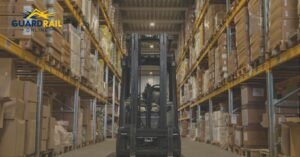
In reality, operators deal with blind spots, load obstructions, and constant pressure to move efficiently. They cannot always see everything around them. This is why relying on assumptions is dangerous.
Therefore, workers need to confirm visibility before moving. Making eye contact, signaling intent, and waiting for acknowledgment helps create clarity in that moment. This small shift removes uncertainty and prevents situations from escalating.
3. Shared Space Creates Risk, But Separation Controls It
Painted lines are often used to define pathways. However, they rely on constant attention and interpretation. This “constant” attention is not always possible and reliable in bust environments of warehouses and industries. This is where warehouse pedestrian barriers change how safety works.
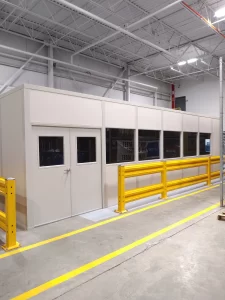
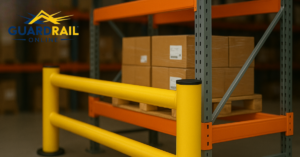
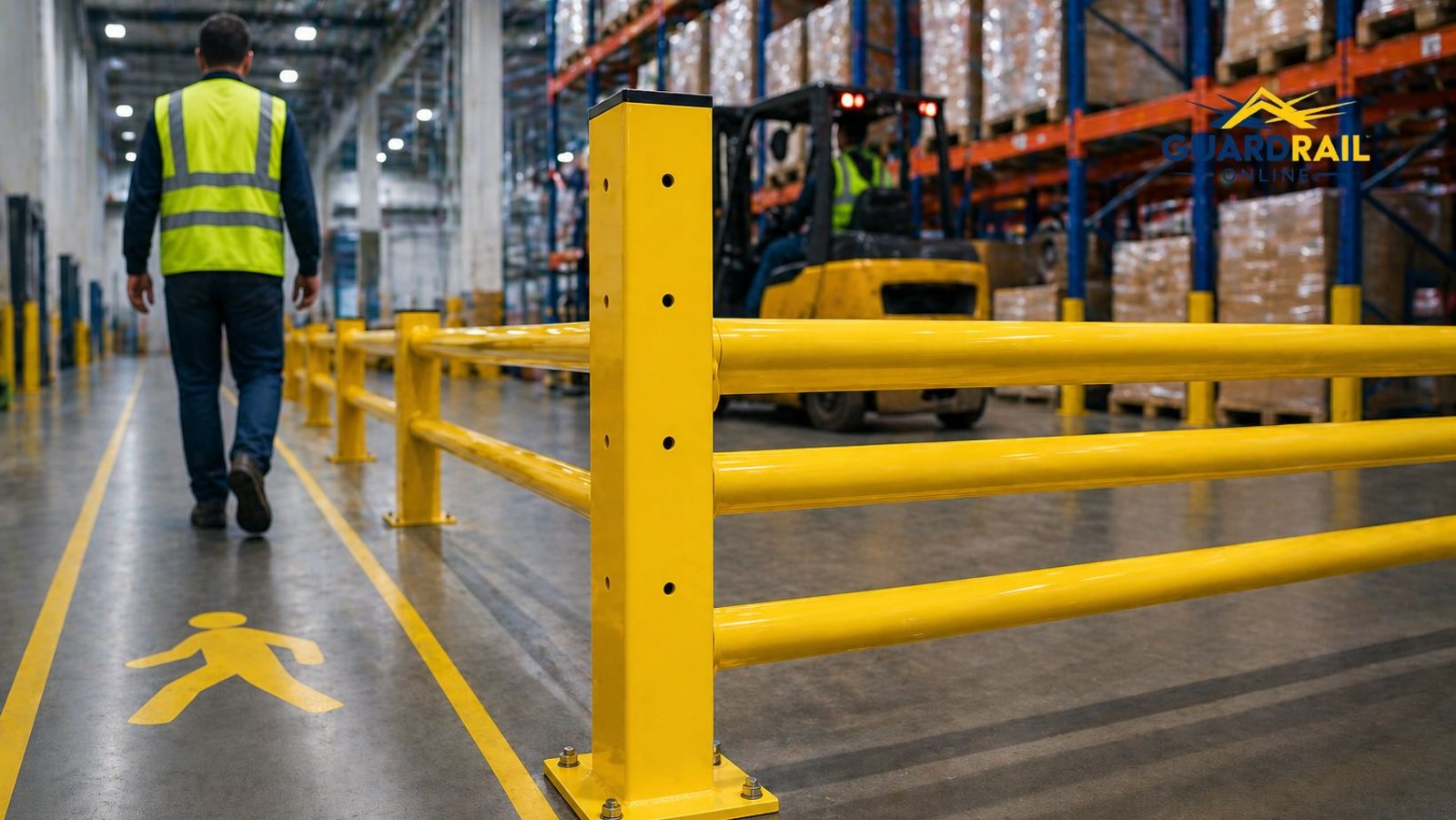
Guardrails when placed in the right locations turn a visual guideline into a physical boundary. With them in place, workers cannot step into equipment zones unintentionally. At the same time, even operators cannot drift into pedestrian areas. This removes confusion from daily movement.
Installation of warehouse pedestrian barriers helps workers to rely more on just their awareness. It helps the environment around guide them. This ensures that workers follow defined paths while equipment stays within designated zones. Such a structured separation reduces risk and improves consistency across operations.
4. Access Control Needs More Than Instructions
Not every area in a warehouse carries the same level of risk. Areas like loading docks, machinery zones, and high-throughput aisles require stricter control. These areas involve constant movement and limited reaction time. Hence, simply marking these zones or instructing workers to avoid them is not enough.
These areas need more control and that’ where warehouse pedestrian barriers create real impact. They act as physical checkpoints at entry points. With them in place, you need not just rely on awareness. These safety barriers enforce boundaries. This ensures that only the right personnel enter high-risk areas, reducing unnecessary exposure.
5. Spotters Add Support, but Have Limits
There are situations where physical separation is not possible. Anything from maintenance work, temporary setups, or confined spaces may require people and equipment to operate close together.
In such cases, spotters provide an additional layer of visibility. They guide operators and help maintain awareness of surroundings. However, this approach works only under strict conditions. The spotter must remain visible at all times. If visibility is lost, operations must stop immediately.
Hence, it is important to understand that spotters support safety. They do not replace structured solutions like warehouse pedestrian barriers.
6. Warning Systems Inform, but Do Not Prevent
Backup alarms, lights, and alerts are widely used in warehouses. These things are used to notify workers when equipment is nearby. However, over time, people become used to these signals. This reduces how effectively workers respond to them, creating gaps.
Warning systems inform, but they do not control movement. Warehouse pedestrian barriers, on the other hand, prevent entry into unsafe zones. They do not rely on reaction time or attention. Hence, including safety barriers into your plan along with lights and alarms helps make safety stronger and more dependable.
7. Training Must Be Consistent for Everyone
Safety systems only work when people understand them. Forklift operators and workers go through detailed training and receive instructions. However, visitors, contractors, and new workers may not fully understand how movement is controlled. This creates gaps.
Every person entering the warehouse is supposed to be given clear instructions. They should know where to walk, where not to go, and how to interact with equipment. But is that possible? In most cases, it might be possible through clear and consistent communication. However, sometimes such things may not be communicated, leaving openings for accidents.
Hence, warehouses need a structured environment that ensures safety, with or without people knowing which areas to go and avoid. This approach becomes easier to maintain with pedestrian guardrails.
Conclusion
At its core, most warehouse incidents are not caused by carelessness. They happen because the environment allows risk to exist. Leaving safety to human behaviour leaves too much room for error. That approach might work well initially, but it comes with its limits. This is why design matters.
Warehouse pedestrian barriers, defined pathways, and controlled access create an environment where risk is reduced by default. Training and visibility add to this foundation, but the structure must come first. So, do you want to create such a structure? Explore the range of safety barriers at Guardrail Online today.
FAQs
What are warehouse pedestrian barriers used for?
Warehouse pedestrian barriers are used to create a clear separation between workers and moving equipment. They help control movement, reduce collisions, and improve overall safety within the facility.
Where should warehouse pedestrian barriers be installed?
Warehouse pedestrian barriers should be installed along walkways, near loading docks, around machinery zones, and at high-traffic intersections. These are the areas where pedestrian and equipment movement often overlap.
Why are warehouse pedestrian barriers important for safety?
Pedestrian safety barriers reduce reliance on human awareness by creating physical boundaries. This helps prevent accidental entry into high-risk zones and ensures safer, more structured movement across the warehouse.