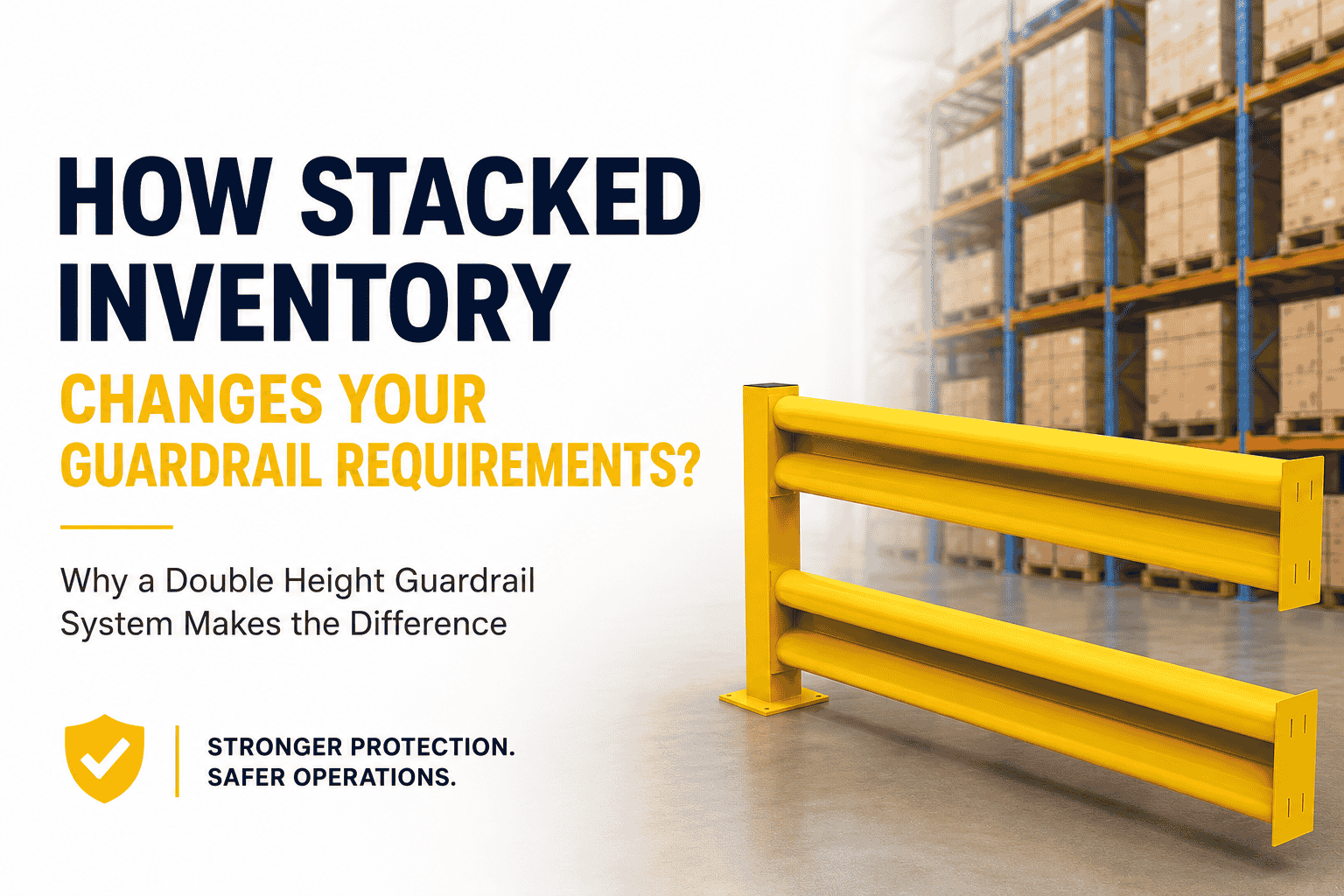
Warehouses today are stacking inventory higher than ever before. Managers are increasingly adopting vertical storage systems to improve space utilization and manage growing inventory demands more efficiently. However, these advantages also introduce a completely new set of safety risks inside the warehouse.
As storage height increases, so do falling-object risks, forklift impact exposure, and pressure on surrounding infrastructure. This is exactly why many facilities are now upgrading to double height guard rail add-on kits around stacked inventory zones.
But does installing a warehouse double guardrail system really make operational sense? Let’s understand how stacked inventory changes your guardrail requirements.
Table of Contents
ToggleWhat Is Stacked Inventory?
Stacked inventory refers to materials, pallets, or products stored vertically across multiple levels within a warehouse. This approach improves operational efficiency significantly. However, it also changes
- How forklifts operate,
- How impacts occur, and
- How protection systems need to perform across the facility
Moreover, the increase in height of storage increases the risks associated with movement, lifting, and falling inventory.
How Stacked Inventory Introduces New Safety Risks?
Stacked inventory changes warehouse risk because it increases both vertical exposure and operational pressure. This means warehouses no longer deal only with movement at ground level.
Moreover, accidents are bound to happen more often, faster, and with far greater consequences once inventory begins stacking vertically. This naturally changes how safety risks develop across the warehouse.
1. Falling Inventory Becomes a Bigger Risk
The higher inventory gets stacked, the greater the chances of falling-object incidents become. Even a small disturbance near elevated racks can destabilize pallets or shift stored materials onto nearby operational zones.
2. Forklifts Begin Operating in More Sensitive Conditions
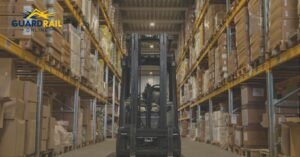
Stacked inventory forces forklift operators to lift and position loads at greater heights. The higher the forklift has to move, the more sensitive the movement will become. Moreover, this also makes positioning errors harder to control safely.
3. Rack-End Damage Becomes More Dangerous
Rack ends experience constant forklift interaction throughout the day. However, stacked inventory changes the seriousness of even smaller impacts near these areas. A minor collision near the lower rack sections can eventually affect the stability of the inventory stored above. This would increase the chances of falling materials and structural damage.
4. Visibility Naturally Reduces Around Tall Storage
Tall inventory stacks naturally block visibility across operational areas. Forklift operators may struggle to monitor intersections as storage height increases. They will not be able to see nearby movement or fail to notice an approaching piece of equipment around stacked inventory zones. These visibility gaps increase the chances of sudden collisions and unsafe movement within the warehouse.
5. Collision Consequences Increase Significantly
Stacked inventory increases the amount of weight, products, and materials stored within the same space. This means collisions near these zones often create far greater damage. A single impact can damage larger quantities of inventory, destabilize stored materials, and interrupt warehouse operations much faster.
6. Shared Zones Become More Dangerous for Workers
Stacked inventory increases the amount of weight stored above active warehouse zones. This means even a small falling-object incident can cause far more serious injuries than standard ground-level storage environments. As inventory height and storage density increase, the risks for workers operating nearby naturally become more severe.
How Stacked Inventory Changes Your Guardrail Requirements?
Standard single-height barriers usually protect against lower-level forklift contact. However, stacked inventory changes the impact zone completely. Forklifts now operate at greater lifting heights while carrying heavier pallet loads, often weighing thousands of pounds. At the same time, many warehouses experience faster forklift movement within tighter operational spaces.
This creates a problem. A basic guardrail may no longer provide enough height or impact coverage around elevated storage zones. Even OSHA warehouse safety compliance strongly emphasizes the need for stronger protection around high-risk storage zones. After all, basic lower-height barriers cannot fully protect against elevated pallet movement, falling inventory, or constant impact near stacked rack systems.
This is exactly why warehouses with stacked inventory often require:
- Taller guardrail coverage
- Stronger beam thickness
- Higher impact resistance
- Multi-level barrier protection
The higher the inventory density and forklift traffic, the stronger the protection requirements become. This is exactly where a double height guard rail add-on kit begins making far more operational sense.
How a Warehouse Double Guardrail System Changes the Equation?
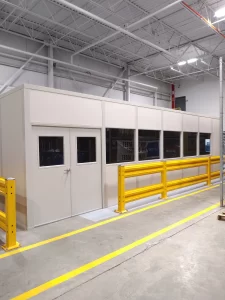
A warehouse double guardrail system is designed to handle the increased risks introduced by stacked inventory. Unlike standard single-height barriers, these systems create protection across a larger vertical area. This becomes extremely important in warehouses where forklifts operate near elevated storage throughout the day.
1. It Creates Better Protection Against Falling Inventory
A properly installed double height guard rail add-on kit helps create additional protection coverage around stacked storage zones. This becomes important because falling inventory does not always strike at ground level. Installing taller barriers here would help contain shifting materials and reduce direct exposure near active operational spaces.
2. It Protects More Than Just Ground-Level Impact Zones
Standard barriers mainly protect lower sections near forklift movement. However, stacked inventory creates risks at multiple heights throughout the warehouse. This is exactly where a warehouse double guardrail system becomes more effective. It helps create protection across both lower and elevated impact zones.
3. It Supports Safer Forklift Operations Near Tall Storage
Forklift operators often drive close to elevated rack systems while lifting and positioning loads at height. A warehouse double guardrail system helps create stronger separation around these sensitive operational zones. This naturally reduces direct exposure near active forklift routes and stacked inventory areas.
4. It Strengthens Protection Around Rack Systems
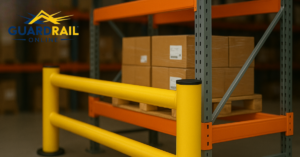
Rack systems experience constant operational pressure in warehouses with stacked inventory. Even smaller impacts near these areas can eventually affect storage stability. A properly installed warehouse double guardrail system helps strengthen protection around rack ends and high-contact infrastructure zones throughout the facility.
5. It Helps Warehouses Adapt to Higher Storage Density
Warehouses often increase storage height as operations expand. However, this also increases the need for stronger infrastructure protection. A double height guard rail add-on kit helps facilities adapt more effectively to changing storage requirements without relying only on basic single-height barriers.
6. It Supports Better Long-Term Safety Planning
Forklift traffic, storage density, and inventory height is bound to increase in warehouses. This means you either need to change your safety infrastructure or find something that can expand with it. This is exactly what double height guard rail add-on kit aims to offer. It offers double the protection with an opportunity of expansion in the future.
Conclusion
Stacked inventory may help warehouses maximize storage space, but it also changes the level of protection the facility actually requires. Warehouses can no longer rely only on basic single-height barriers to manage operational risks safely Once inventory begins stacking higher.
This is exactly why a warehouse double guardrail system becomes a practical long-term investment instead of just an added safety feature. It helps facilities create better protection around elevated storage, high-impact zones, and active forklift routes without leaving critical areas exposed.
Are you planning to strengthen protection around stacked inventory areas? Explore high-quality double height guard rail add-on kits from Guardrail Online today! Our safety barriers are designed for demanded warehouses that want to enhance protection in their spaces.