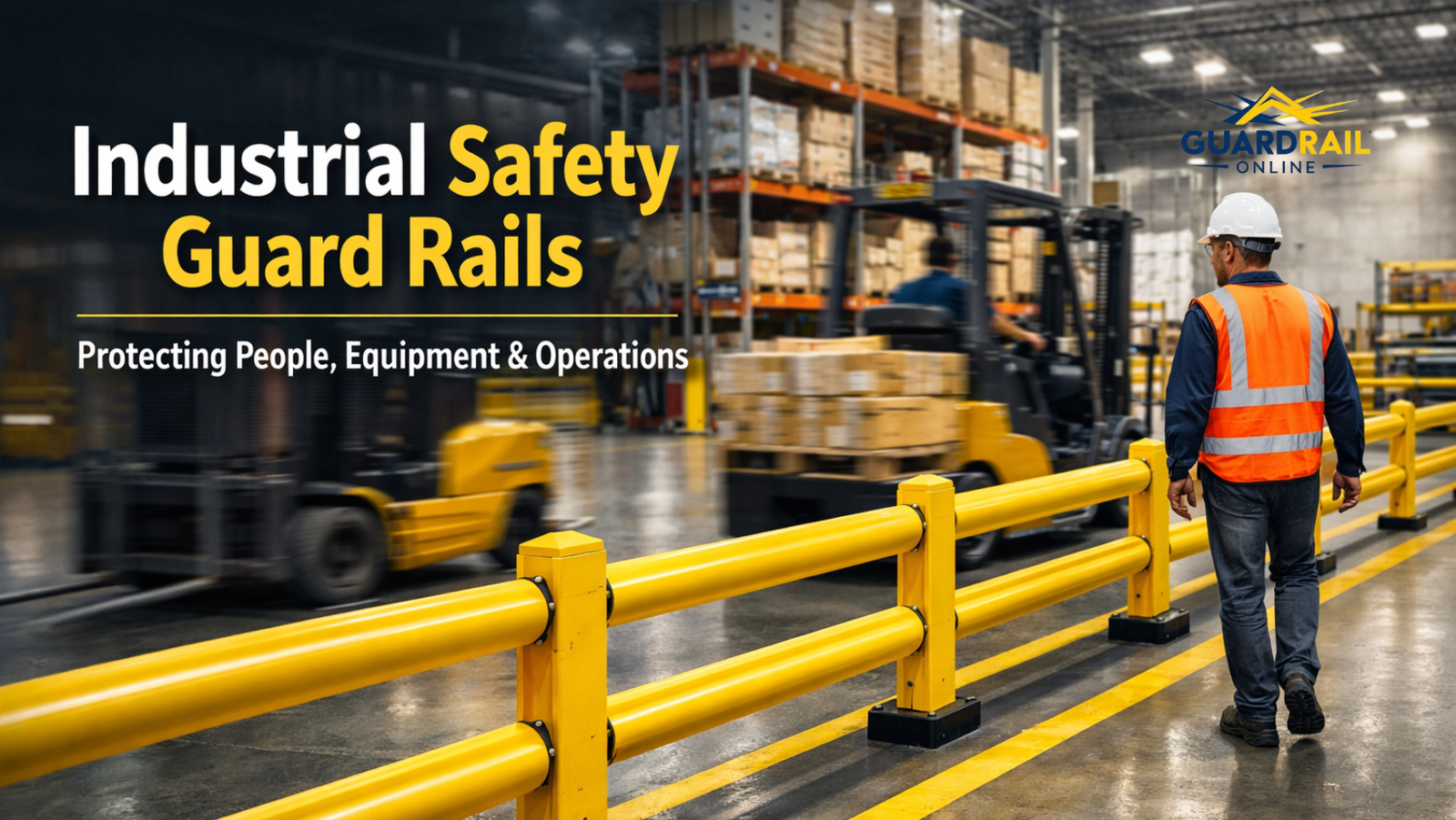
More and more facilities are adding industrial safety guard rails across their spaces. You will see them around platforms, walkways, and high-risk zones where movement never stops. Has this ever made you wonder why they are becoming so common in the first place?
Many businesses are now re-evaluating how they approach safety within their operations. This article breaks down exactly why industrial safety guard rails are no longer optional. It explains the real value they bring and why they have become a critical part of modern industrial safety systems.
Preventing Falls in High-Risk Areas
Industrial facilities often include elevated platforms, mezzanines, and open edges. These structural elements are common sources of fall-related incidents. Workers operate close to these edges while managing tasks that demand constant focus and movement. In such situations, even a minor lapse in attention can lead to serious consequences.
This is where industrial safety guard rails become essential. They introduce a defined physical barrier in areas where risk cannot be eliminated. You don’t have to leave safety to chance! Instead, you can create a controlled separation between workers and exposed edges with these safety barriers.
Many believe that “being aware” is enough to prevent accidents. However, maintaining constant awareness is not practical in fast-paced industrial environments. Here, workers are often engaged with equipment, coordination, and task execution.
Relying only on human attention is bound to create unavoidable gaps. Industrial safety guard rails address this by providing continuous protection. They reduce dependence on human judgment and ensure that safety remains consistent, regardless of conditions.
Creating a Safer Movement Flow Within Facilities
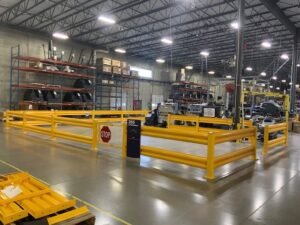 Industrial facilities are constantly in motion. Workers, forklifts, and heavy equipment move through shared spaces at the same time. Lack of structure can quickly turn this movement unpredictable and increase the risk of collisions.
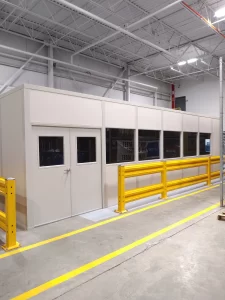
This is where industrial safety guard rails play a critical role. They help define clear pathways within the facility. They separate pedestrian zones and vehicle lanes with intent. You no longer rely on people to “figure it out” in busy environments. Instead, movement is guided through visible and physical boundaries.
Guardrails create a setting where clarity becomes essential. Workers know exactly where to walk. Operators understand where to drive and maneuver equipment. This structured flow reduces hesitation and limits confusion. Safety barriers also significantly lower the chances of unexpected contact between people and moving machinery.
Protecting Equipment and Infrastructure
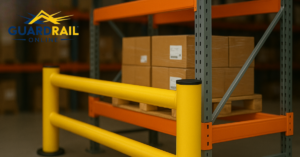
Industrial environments also house critical machinery, storage systems, and structural assets. Even a minor collision in such spaces can lead to costly damage and unexpected downtime. But you can prevent such damage with industrial safety guard rails. When installed, they act as a protective barrier between moving equipment and vulnerable infrastructure.
Safety barriers absorb and control the impact that would have otherwise hit your equipment or infrastructure. This prevents damage before it occurs. Keeping your infrastructure protected does not just prevent losses but also ensures operations remain stable. This continuity minimizes financial losses.
Supporting Regulatory Compliance
Industrial environments operate under strict safety regulations. These standards are not optional. In fact, failing to meet them can result in heavy fines, legal complications, and even temporary shutdowns.
A major focus of these regulations is fall protection in high-risk areas. Facilities with elevated platforms or exposed edges are expected to have proper safety systems in place. This is where industrial safety guard rails become essential. Their inclusion is often a direct requirement, not just a recommended measure.
Installing safety barriers ensures you align your facility with compliance expectations. At the same time, they reduce the risk of penalties and operational interruptions. More importantly, installing guardrails shows that safety is not treated as an afterthought, but as a core responsibility.
Improving Worker Confidence and Productivity
The way a workplace feels directly affects how people perform. When workers sense risk around them, their focus shifts from the task to their safety. This hesitation slows movement and creates unnecessary interruptions.
The installation of industrial safety guard rails makes a visible difference here. They create a sense of protection that workers can rely on throughout the day. With them, workers can stay focused on the work at hand instead of worrying about their safety. This shift improves consistency and reduces disruptions.
Safety barriers indirectly help ensure that work gets done with greater clarity and control. Over time, this confidence translates into better productivity and a more stable working environment.
Conclusion
By now, it is clear that guardrails do more than prevent isolated incidents. They bring structure to movement, reduce exposure to risk, protect critical assets, and help meet safety requirements with confidence.
Over time, this consistency begins to influence how safety is understood across the facility. Teams do not just follow rules. They start working within a system that supports them at every step. That is how a strong safety culture is built. It is not enforced. Instead, it is experienced daily through reliable protection.
So, do you want to strengthen safety across your industrial space? The right industrial safety guard rails make all the difference. This is why thousands of people across the United States choose Guardrail Online. Explore our high-quality guardrail solutions today!
FAQs
What is guard rail in safety?
A guard rail is a protective barrier installed to prevent falls and control movement in high-risk areas. It creates a physical boundary between people and potential hazards.
What are the four general types of guardrails?
The four common types include standard guardrails, traffic guardrails, rooftop guardrails, and industrial safety guardrails. Each of these systems is designed for specific environments and risk levels.
What are the three parts of a guardrail?
A guardrail system typically includes a top rail, a mid rail, and a toe board. Together, they provide complete fall protection and structural support.