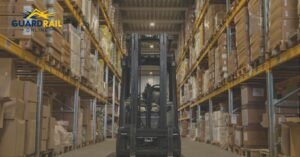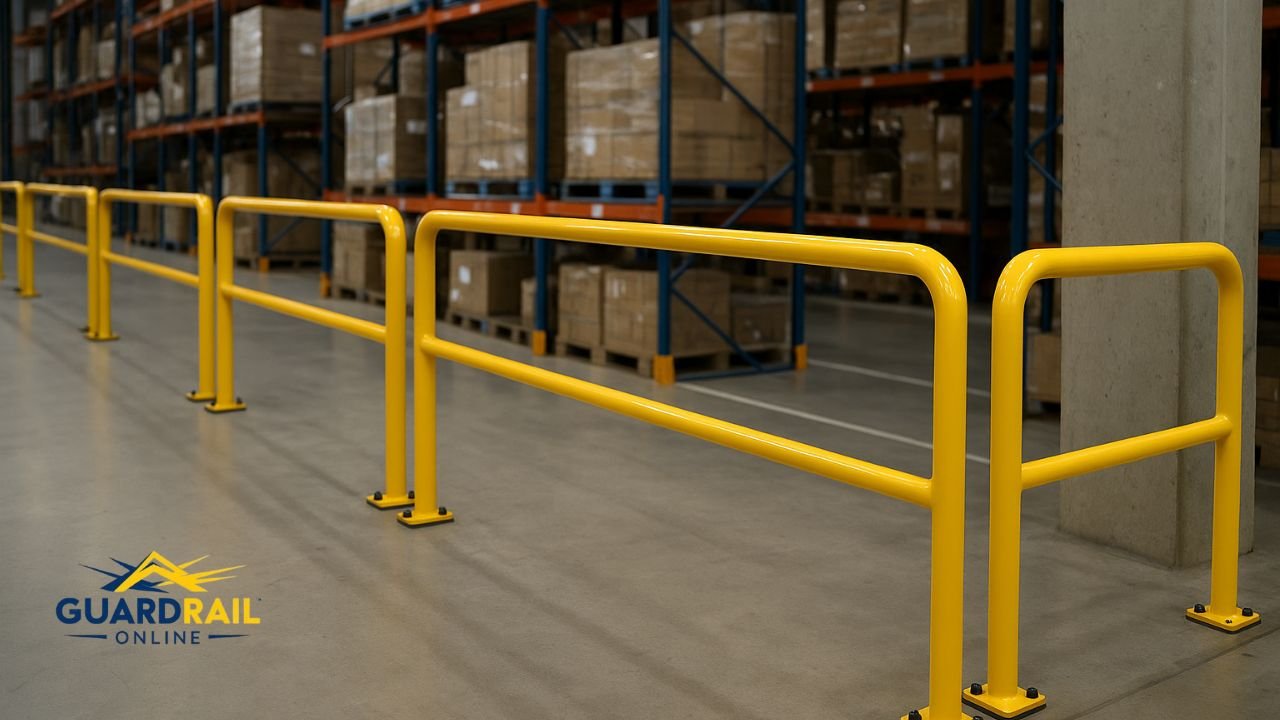
When you step into any modern warehouse, one thing becomes immediately clear, that this is a space built on movement. You will notice how forklifts are continuously gliding through narrow aisles and the way pallet jacks are shifting loads across the floor. Moreover, one may even notice how the teams are constantly working in sync to meet the demands of fast-paced logistics and production schedules. But with all that motion comes a heightened need for safety. After all, we know that such dynamic spaces are one move away from an accident.
In this environment, even the smallest miscalculation can lead to a serious incident. Imagine a worker stepping into the wrong zone. Or maybe, a forklift taking a blind corner too fast? These are the moments where accidents don’t just happen, they in fact escalate. That’s why passive safety systems, especially warehouse pedestrian barriers, play such a vital role.
These aren’t just physical boundaries. They’re engineered safety systems designed to guide foot traffic, separate people from machinery, and provide critical protection when something goes wrong. But it’s not enough to install just any guardrail or safety barrier. The real difference between safety and collision lies in choosing pedestrian barrier systems that are purpose-built for warehouse environments. But how do you ensure that your chosen warehouse pedestrian barriers are met to prevent accidents and strengthen safety?
This article aims to explore the 7 essential features that make pedestrian barriers effective. Read on to know which features should be non-negotiable when buying safety barriers for warehouses.
Table of Contents
ToggleEnhanced Impact Resistance
When you are walking through a warehouse as a manager or supervisor, you probably don’t think twice about the space around you. But for the workers who navigate these environments daily, the reality is much different.
They understand the high-risk environment they work in. With forklifts, pallet jacks, and other heavy equipment constantly in motion, even a minor mishap can quickly escalate into a serious accident. That’s why warehouse pedestrian barriers are an essential part of warehouse safety. However, not just any safety barrier will do.
Imagine a forklift clipping a pedestrian barrier at full speed. If the barrier is weak or poorly constructed, it could buckle or shift under pressure, leaving the worker exposed to harm. The cost of such an event can be high, not just in terms of human safety, but also in terms of damaged inventory, equipment, and lost time. This is why impact resistance is one of the most critical features to look for when selecting warehouse pedestrian barriers.
But what exactly is impact resistance? Simply put, it refers to the barrier’s ability to absorb or deflect the force from collisions without compromising its integrity. In a busy warehouse, this means that a well-designed barrier can withstand the force of forklifts, pallet jacks, and other machinery moving at high speeds, without buckling or shifting. Without proper impact resistance, a single collision can cause catastrophic damage to your workforce as well as the entire operation. That’s why impact-resistant warehouse pedestrian barriers are not a luxury, but are an absolute necessity.
At Guardrail Online, we understand that a barrier’s primary job is to protect your team and your assets. That’s why we focus on creating impact-resistant safety barriers that offer maximum protection in even the most demanding environments. Our pedestrian barriers are designed to withstand forces up to 10,000 lbs at 4 mph. These robust steel barriers are built to last and perform under high-stress conditions, even in the busiest, highest-traffic areas of your warehouse. Our barriers act as a shield that absorbs impact energy, preventing harm to your workforce and keeping your operations moving smoothly.
Pedestrian-Friendly Height and Design
Clarity is key in any and every warehouse for pedestrians as well as the machines or vehicles that move around them. A well-defined walkway indicates to workers where they should be. On the other hand, the same walkways signal to forklift operators actually where they should stop or speed down. But that clarity isn’t just about lines on the floor. It’s also about the height and design of your warehouse pedestrian barriers. After all, if a barrier is too tall, it can block sight lines for both workers and drivers. On the other hand, if it’s too low, it won’t provide the necessary protection.
Hence, a safety barrier’s height is the most visible feature of its design and plays a crucial role in ensuring safety. Safety professionals recommend a height of around 36 inches for pedestrian walkways in busy warehouse environments. This height is perfect because it aligns with the average adult waist level, which is enough for pedestrians to see over. The same height also allows the forklift operators and other vehicle drivers to spot barriers and pedestrians at a glance. Striking that balance helps reduce near misses and improves awareness, especially at high-traffic intersections or crosswalks.
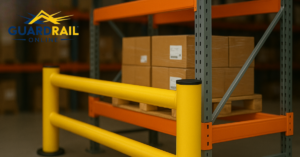
But height alone isn’t enough. The design of the warehouse pedestrian barriers plays a vital role in preventing accidents. For example, rounded rails can reduce the risk of snagging clothing or tools, while smooth welds and recessed fasteners remove potential tripping hazards. Even the smallest touches, like a low-profile base plate or a small toe plate, can prevent small objects from rolling into forklift paths, which is in fact another way to keep incidents to a minimum.
At Guardrail Online, we focus on building systems that meet these high standards of safety and functionality. Our warehouse pedestrian barriers feature 36-inch heights, smooth finishes, and rounded ends. All of these are specifically included to ensure clear sight lines and safer interactions in your facility. These thoughtful design choices allow for better visibility, clearer paths, and safer work environments, all of which are crucial for maintaining productivity while minimizing risk.
Modular Flexibility for Customized Walkways
Warehouses are dynamic spaces that change frequently. New product lines are always coming in, seasonal surges often require adjustments to pallet flows, and sometimes entire layouts need to be reworked. This constant modification makes having a rigid guardrail system a challenge. If a guardrail system is too inflexible, it can force costly rework, create safety blind spots, and ultimately slow down operations. That’s where modular warehouse pedestrian barriers come in.
Modular guardrail systems offer the flexibility to easily adapt to changing warehouse needs. These safety barriers arrive in standard lengths with predictable post patterns, making installation straightforward and efficient. Moreover, most of these warehouse pedestrian barriers don’t even require onsite welding or custom fabrication. Instead, components are required to be simply bolted together. This design not only reduces installation time but also eliminates the need for specialty labor. This makes it possible to move or adjust pedestrian guardrails as needed, without disrupting your workflow.
The cost benefits of modular warehouse pedestrian barriers are even higher. Having modular pedestrian guardrails means you can reuse posts and rails. This simple act helps avoid the need to purchase new materials every time your warehouse layout changes. Moreover, their faster reconfigurations mean reduced downtime during retrofits, allowing your team to get back to work with minimal disruption.
At Guardrail Online, we offer modular pedestrian safety barriers that are easy to install and even easier to adapt. Our kits come with matched fasteners, pre-drilled plates, and rails designed for common aisle widths. This ensures that modifications can be made onsite quickly and efficiently. So, do you want to gain a safety solution that can change and evolve easily along with your business? If so, then choosing modular warehouse pedestrian barriers from experts like Guardrail Online is the ideal choice.
High-Visibility Colors and Finishes
Every decision you make at a busy warehouse can be a life-or-death moment. Whether it’s a worker stepping into a forklift’s path or a driver navigating through tight aisles, it’s often the smallest decision that makes all the difference. That’s why it’s so critical to reduce those “near misses”—the moments where an accident almost happens but doesn’t. These instances may not always result in a collision, but they highlight the potential risks and vulnerabilities within the environment.
Visibility plays a critical role in preventing these near misses. A pedestrian or vehicle operator may not always have time for a second look or to make a calculated move. But they do have time for visual cues. A brightly colored, highly visible barrier can grab attention in an instant, signaling a potential hazard long before a collision happens. The right colored warehouse pedestrian barriers like safety yellow do more than just look bright. They act as a warning signal, alerting both pedestrians and operators that they are entering a zone where caution is needed.
Installation of a high-visibility barriers don’t just offer visible cues. They even minimize confusions by making it clear to workers where they can and cannot go. These barriers act as “stop signs”, not just for forklifts, but for everyone in the area, helping workers make snap decisions based on what they can see. But you don’t just need high visibility warehouse pedestrian barriers. Instead, the aim is to get pedestrian guardrails that are durable, too.
If barriers lose their brightness, the same near-miss situations can escalate into actual accidents. That’s why durability matters as much as visibility. Hence, choosing warehouse pedestrian barriers made of powder-coated finish is a wise decision. These safety barriers don’t just look good but stay visible too. These guardrails resist fading, chipping, and abrasion, even in tough environments where standard paint would wear away after a few months. This ensures that barriers continue to provide clear, reliable warnings to workers and operators, day in and day out.
At Guardrail Online, we ensure that our barriers remain highly visible and durable with high-quality powder-coated finishes. Our safety yellow barriers are built to stand the test of time. They are designed to provide constant visual cues that keep your warehouse environment safe, clear, and efficient. This means less risk, fewer near-misses, and better protection for your team.
Low Maintenance and Long-Term Durability
Warehouses are dynamic spaces that are constantly in motion, with heavy equipment, foot traffic, and high-stakes operations happening at all times. But the ripple effect is immediate when equipment or safety barriers break down. Whether it’s costly downtime, delays in operations, or increased safety risks, the consequences of frequent repairs can be huge. That’s why choosing durable, low-maintenance warehouse pedestrian barriers is more than just a financial decision—it’s a safety decision.
When safety barriers are constantly being replaced or repaired, it creates vulnerabilities. Gaps in protection leave workers exposed, making the entire warehouse environment more dangerous. Plus, the repair costs keep adding up, which affects both the bottom line and the overall safety of the facility. On the contrary, long-lasting, low-maintenance pedestrian guardrails keep operations running smoothly. They reduce the need for constant repairs, which means less disruption and fewer gaps in safety.
But, what makes warehouse pedestrian barriers truly durable? The material is key. Steel is one of the toughest, most reliable materials to use for pedestrian guardrails. Its durability only increases when they are combined with a corrosion-resistant coating. Such warehouse pedestrian barriers can in fact withstand the toughest conditions. Steel barriers are even known to not bend, break, or shift under pressure. Moreover, these safety barriers won’t corrode or rust even when exposed to harsh chemicals or constant heavy-duty traffic. That level of resilience is vital in warehouses, isn’t it?
This is why, at Guardrail Online, we use ASTM A1011 steel in our pedestrian barriers. The steel we use is specifically designed to stand up to the harshest warehouse conditions. Paired with corrosion-resistant coatings, these warehouse pedestrian barriers keep your factory protected with minimal maintenance. This reduces long-term costs, improves operational efficiency, and provides reliable protection for your workforce, year after year.
Easy-to-Install Systems
Warehouses cannot afford delays. These are dynamic environments where every minute counts. Whether it’s fulfilling orders, loading docks, or managing inventory, any unexpected interruption can ripple across the entire operation. That’s why safety improvements, while essential, are required to be implemented without forcing productivity to a halt.
Unfortunately, many warehouse pedestrian barriers come with complicated installation processes. These often involve custom modifications, specialized labor, or even temporary shutdowns of active zones. Not only does this delay operations, but it also discourages teams from upgrading their safety systems when they need it most. This is where easy-to-install warehouse pedestrian barriers such as those provided by Guardrail Online provide a significant advantage. Such companies offer guardrail systems that are designed for fast deployment and minimal disruption. They allow safety upgrades to be completed during scheduled maintenance windows or between shifts, and that too without impacting your throughput. But how do these pedestrian guard rails differ from others?
The key here lies in the modular construction of these pedestrian barrier systems. Such warehouse guardrails are built with pre-drilled components, standardized post spacing, and included hardware to simplify the entire process. Most safety barrier kits are in fact engineered to fit common aisle widths and walkways. These systems allow teams to install guardrails using basic tools and without any welding or fabrication on-site. This modularity not only speeds up installation of warehouse pedestrian barriers but also allows for future reconfiguration as warehouse layouts evolve.
At Guardrail Online, our pedestrian safety barriers are designed with warehouse efficiency in mind. Every kit comes complete with all necessary components, including anchors, fasteners, and clear instructions. The barriers are pre-engineered to align with standard facility layouts, reducing the time and guesswork involved in assembly. Using our pedestrian safety barriers means you never have to worry about downtime, costly delays or disruptions to any workflow.
Secure Floor Anchoring
There is constant movement within warehouses. Forklifts are constantly turning corners. Pallet jacks often roll through tight aisles. Workers move quickly throughout the warehouse to meet deadlines. In this constant motion, durable and high-visibility barriers play a crucial role. But that’s not all! Warehouse pedestrian barriers are need to stay firmly in place.
Poorly anchored guardrails, no matter how strong, may move with just one minor impact. That small movement might not seem like much at first, but it can create a dangerous ripple effect. A barrier misaligned due to poor anchoring may no longer protect the walkway it was meant to, or worse, give workers a false sense of security. In more serious cases, the entire pedestrian guardrail can become unstable and collapse, putting everyone at risk.
That’s why secure floor anchoring is a non-negotiable part of pedestrian safety. Warehouse pedestrian barriers need to remain firmly in place, even after repeated impact, vibrations from nearby equipment, or constant pressure from moving machinery. Stability is in fact what turns a barrier from a visual marker into a dependable layer of physical protection.
This is why top trusting vendors like Guardrail Online provide high-quality pedestrian guardrails that are created with reinforced baseplates. They provide base plates that are actually designed to distribute impact force evenly across the surface, reducing the chances of shifting or cracking. These plates are often paired with industrial-grade wedge anchors or mechanical fasteners, chosen based on the floor substrate and load requirements. Together, this anchoring system ensures that the warehouse pedestrian barriers remain locked in position, regardless of the adverse impacts it endures.
At Guardrail Online, our barrier systems use heavy-duty baseplates paired with tested and rated floor anchors to create a solid connection between barrier and concrete. These components are engineered to hold up in demanding environments where impacts are not only expected but are in fact frequent. Our anchoring systems also meet industry standards for static and dynamic loads, ensuring your barriers won’t budge, shift, or degrade over time.
Conclusion
Safety is not just important to avoid accidents in a warehouse. In fact, it is essential to build trust, consistency, and control into every part of your operation. Ensuring safety may be a complex task, but warehouse pedestrian barriers offer one of the most tangible ways to do that. They protect, they guide, and they reinforce the message that your workforce matters.
But truly effective pedestrian barrier systems go beyond physical protection. They reduce downtime, adapt to changing layouts, and hold strong under pressure. Moreover, the right guardrails will even maintain visibility in the toughest conditions. Ultimately, over time, they help create a safer, more confident workforce — one that’s empowered to work efficiently without constantly looking over their shoulder.
At Guardrail Online, we aim to deliver just that! We know that safety isn’t a checkbox — it’s a value. Hence, we are committed to delivering the most durable, efficient, and high-visibility warehouse pedestrian barriers in the United States. So, do you want to create a workspace where safety and productivity go hand in hand? Contact us today!
FAQs
Q1. What are warehouse pedestrian barriers, and where should I place them?
Warehouse pedestrian barriers are physical guardrails that keep people separate from forklifts and pallet jacks. Place them at crosswalks, loading docks, mezzanine edges, packing stations, and anywhere pedestrians and machines meet.
Q2. How strong should warehouse pedestrian barriers be to protect people and equipment?
Choose warehouse barriers with proven impact ratings rather than guessing by looks. A tested rating around 10,000 pounds at 4 miles per hour shows the guard rail can absorb heavy forklift force without collapsing. Investing in such impact rated barriers reduces repairs, avoids downtime, and keeps people safer.
Q3. What height and design features improve pedestrian safety the most?
Aim for about 36 inches height for pedestrian routes to keep sight lines open. Note that rounded rails are known to reduce snag risks and smooth welds prevent sharp edges. Choose guard rails with a low profile base plate as they can stop small items from rolling under the rail. These simple design choices keep paths clear and lower the chance of near misses.
Q4. Will modular warehouse pedestrian barriers work if our layout changes often?
Yes, modular barrier systems bolt together and can be reconfigured without welding. You can reuse posts and rails when aisles shift or new lines arrive. This flexibility cuts installation time and avoids costly rebuilds.
Q5. How do I maintain warehouse pedestrian barriers so they last and stay effective?
Inspect safety barriers after any impact. Moreover, create a bu-weekly or monthly schedule to check up on your warehouse pedestrian barriers. During such inspections, always check anchors, bolts, and base plates for looseness or damage. You should also touch up powder coat chips to keep visibility and prevent corrosion. Moreover, clean debris from around the base, so damage does not go unnoticed. Such small, regular checks prevent larger problems and keep your barriers reliable.