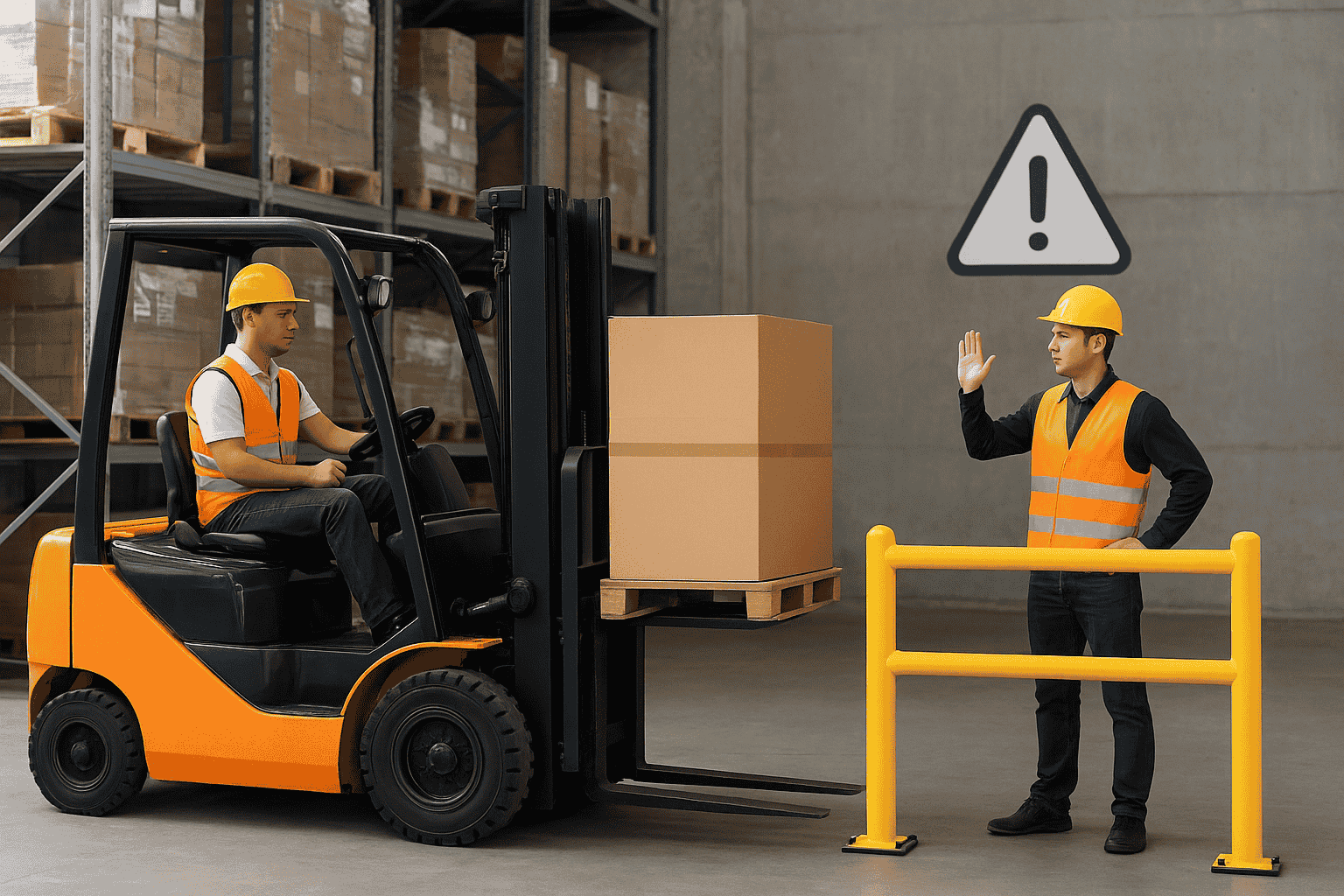
Warehouses remain one of the most dangerous work environments in the United States. According to the Bureau of Labor Statistics, warehouse facilities experience 4.8 injury cases per 100 full-time workers more than double the private industry average of 2.3 per 100. Forklifts alone account for 84 work-related deaths in 2024 and over 25,000 serious non-fatal injuries annually (National Safety Council, 2026).
The good news: most of these accidents follow predictable patterns and most are preventable. This guide covers the 7 most common warehouse accidents, what causes them, and how physical safety systems like steel guardrails stop them before they happen.
Table of Contents
Toggle#1 Forklift Collisions
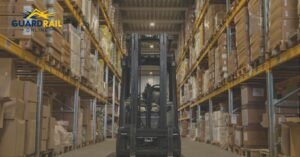
Forklift collisions are the most frequent and most disruptive warehouse accident. OSHA estimates between 35,000 and 62,000 forklift-related injuries occur every year in the US and 36% of forklift fatalities involve pedestrians caught in collision zones.
What causes them:
- Restricted sightlines at blind corners and intersections
- Temporary storage blocking aisle clearance
- High traffic density during shift changes
- Operator fatigue and distraction under production pressure
How to prevent them:
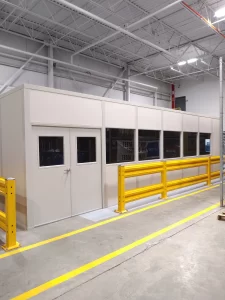
Separate pedestrian and forklift traffic with clearly marked pathways, intersection mirrors, and enforced speed limits. For a permanent solution, install heavy-duty steel guardrails along pedestrian walkway boundaries. A physical barrier eliminates the risk of a forklift drifting into foot traffic no amount of signage or floor marking achieves that.
Where guardrails prevent forklift collisions:
- Pedestrian crosswalk boundaries
- Aisle intersections where sightlines are restricted
- Packing station and conveyor edges where workers are stationary
#2 Falling Goods
Falling goods cause a significant proportion of warehouse injuries — particularly head trauma, fractures, and crush injuries. Unsecured loads, deteriorating pallets, and sharp forklift movements are the most common triggers.
What causes them:
- Cracked or damaged pallets that give way under load
- Improperly secured loads shifting during transport
- Forklifts accelerating too quickly with elevated loads
- Worn carriage mounts creating load instability
How to prevent them:
Implement regular pallet inspection protocols and enforce load securement procedures before any lift. Train operators to maintain low travel height and reduce speed when carrying elevated loads. Isolate staging lanes from foot traffic so that if goods do fall, they fall away from workers.
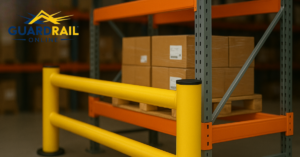
Install guardrails at rack ends and staging lane boundaries as an additional line of defense. A rated steel barrier redirects falling debris away from pedestrian zones — protecting workers even when human error occurs.
#3 Loading Dock and Platform Accidents
Dock and platform areas combine two hazards simultaneously — vehicle impact and fall exposure — making them one of the highest-risk zones in any warehouse. A forklift that slips off an unchocked trailer or rolls off an unlocked dock leveler can cause catastrophic injuries in seconds.
What causes them:
- Trailers not chocked before forklift entry
- Dock levelers not properly locked during loading
- Sudden trailer movement while forklift is inside
- Congestion during peak loading windows
How to prevent them:
Establish strict dock protocols — wheel chocks and trailer restraints mandatory before any vehicle entry, dock plates locked before personnel access, staggered vehicle movements to reduce congestion. Assign a trained dock supervisor during peak periods.
Install dock rail systems and perimeter barriers along all platform edges. Under OSHA 29 CFR 1910.28, open-sided platforms 4 feet or more above floor level require fall protection. Double height guardrails (42″ top rail height) satisfy this requirement while simultaneously providing vehicle impact protection.
#4 Forklift Tip-Overs
Forklift overturns account for 25% of all forklift accidents — and 24% of those overturns result in fatalities, making tip-overs the single deadliest category of forklift incident. Approximately 42% of all fatal forklift accidents involve the operator being crushed when the vehicle tips over (OSHA).
What causes them:
- Uneven or damaged floors
- Improperly loaded pallets shifting the center of gravity
- High-speed turns with elevated loads
- Steep ramps and dock transitions
- Overloading beyond rated capacity
How to prevent them:
Enforce low travel height at all times when moving loads. Prohibit speeding around ramps and corners — post speed limits and enforce them. Train operators on wide-turn techniques when carrying heavy loads. Conduct pre-shift floor inspections to identify surface damage.
Install heavy-duty guardrails along ramp edges, mezzanine thresholds, and elevated platform perimeters. A guardrail at a ramp edge keeps a tipping forklift from going over — protecting both the operator and anyone below.
#5 Equipment and Technical Failures
Powered industrial trucks account for only 1% of all warehouse accidents but they account for 11% of all physical injuries, because forklift incidents tend to be significantly more severe than other accident types (OSHA). Equipment failure brake failure, hydraulic collapse, steering malfunction contributes to a meaningful share of these incidents.
What causes them:
- Delayed or skipped maintenance schedules
- Overlooked pre-operation inspection checklists
- Poorly documented repair records
- Worn parts not replaced before failure
How to prevent them:
Implement a structured maintenance schedule with daily pre-operation checks. Log every issue — no matter how minor — and address it before the equipment returns to service. Replace worn hydraulic seals, brake components, and steering parts proactively.
Even with the best maintenance, equipment can fail without warning. Guardrails protect the secondary impact zones — electrical panels, control cabinets, conveyor systems, and pedestrian areas — so that when a forklift does malfunction, the damage is contained.
#6 Falls From Height
Falls from ladders and elevated platforms cause 20% of all fatal warehouse accidents making height-related falls one of the top killers in the sector (National Safety Council, 2023). These incidents typically involve workers standing on forks, using makeshift platforms, or accessing mezzanine edges without proper fall protection.
What causes them:
- Using forklifts as personnel lifts without certified platforms
- Unguarded mezzanine edges and platform openings
- Absence of toe boards allowing tools and materials to fall
- Lack of supervision and unclear access procedures
How to prevent them:
Eliminate the use of forklifts as personnel lifts unless a certified, properly documented personnel platform is installed and OSHA procedures are followed. Use certified aerial lifts for any task requiring elevation.
Install permanent perimeter protection around all mezzanine edges and elevated platforms. OSHA 29 CFR 1910.29 requires a top rail at 42 inches (plus or minus 3 inches), a mid-rail, and toe boards where workers are present at elevation. Double height guardrail systems are designed specifically to meet these requirements.
#7 Parking Zone and Staging Area Accidents
Parking zones and staging lanes are frequently overlooked in warehouse safety audits — but they are consistent sources of low-speed, high-frequency damage incidents. Reversed forklifts striking rack uprights, trucks clipping structural columns, and staging areas improperly used for long-term storage all contribute to cumulative structural damage that creates serious safety hazards over time.
What causes them:
- Poor visibility and rushed movements during shift changes
- Unmarked or overcrowded staging areas
- Absence of physical boundaries between parking bays and rack runs
- Inadequate lighting in staging zones
How to prevent them:
Define parking bays clearly with floor markings, wheel stops, and numbered bay labels. Improve lighting in staging zones. Conduct regular audits to prevent staging areas from becoming permanent storage.
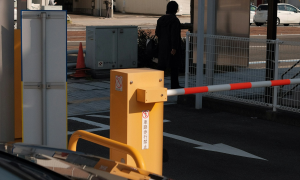
Install guardrails along parking bay edges and at the ends of rack runs adjacent to staging lanes. Even low-speed forklift contact causes cumulative damage to unprotected rack uprights over time — a guardrail absorbs that contact before it reaches the structure.
What All 7 Accidents Have in Common
Every accident category above shares a common thread: a physical barrier would have reduced or eliminated the impact. Training, procedures, and inspections are all essential — but they depend on consistent human behavior. A guardrail works every time, regardless of operator experience, shift fatigue, or production pressure.
A single workplace incident can exceed $200,000 in total impact when you factor in medical costs, downtime, equipment repair, investigation time, and potential OSHA penalties. Willful OSHA violations now cost up to $165,514 per violation. A complete guardrail system for a standard warehouse aisle run costs a fraction of a single incident.
Guardrail Online’s Heavy-Duty Warehouse Guardrail System
Our steel guardrail systems are engineered and manufactured by Guardrail Online LLC to meet real warehouse conditions:
| Specification | Value |
|---|---|
| Rail material | 11-GA pre-galvanized corrugated steel |
| Post material | 4.72″ x 4.72″ x 3/16″ thick steel |
| Base plate | 10″ x 10″ x 5/8″ thick, welded |
| Finish | Pre-galvanized + powder-coated Safety Yellow (RAL 1023) |
| Impact rating | 10,000 lbs at 4 mph when properly installed |
| Hardware | Grade 8.8 throughout |
| Warranty | 12 months |
| Rail lengths | 2ft to 10ft (9 options) |
Single height systems for rack protection, pedestrian walkway separation, and equipment perimeters.
Double height systems — for mezzanine edges, elevated platforms, and dock perimeters where OSHA fall protection compliance is required.
Ships to all 48 contiguous US states. Trade pricing available for dealers, installers, and contractors.
Shop now: guardrailonline.com/shop/
Call: 214-730-5940
Email: sales@guardrail.online
Frequently Asked Questions
How many warehouse accidents involve forklifts each year?
OSHA estimates between 35,000 and 62,000 forklift-related injuries occur annually in the US. The National Safety Council reported 84 forklift-related work deaths in 2024 and over 25,000 serious non-fatal injuries in 2023-2024.
Where should guardrails be installed in a warehouse?
The highest-priority locations are pedestrian walkway boundaries, pallet rack aisle ends, loading dock edges, mezzanine perimeters, machinery and equipment surrounds, and parking and staging lane boundaries. These are the zones where the 7 accident types above are most likely to occur.
Do warehouse guardrails meet OSHA requirements?
Double height systems with a 42-inch top rail height meet OSHA fall protection requirements under 29 CFR 1910.29 for mezzanines and elevated surfaces. Single height systems address vehicle impact protection requirements under 29 CFR 1910.176(a). Always verify specific installations against current OSHA standards.
What impact force should a warehouse guardrail withstand?
The industry standard for heavy-duty warehouse guardrails is 10,000 lbs at 4 mph — the approximate impact force of a loaded counterbalance forklift at normal operating speed. Confirm this rating is published explicitly by the manufacturer.
How long do warehouse guardrails last?
Heavy-duty steel guardrails with dual-layer galvanized and powder-coated finish typically last 10 to 20 years indoors under normal conditions. High-traffic forklift zones may require individual section replacements every 5 to 10 years. Modular systems allow section-by-section replacement without replacing the full run.
Can guardrails prevent all warehouse accidents?
No safety measure eliminates all risk — but guardrails address the physical environment permanently, independent of human behavior. Combined with proper training, maintenance schedules, and OSHA-compliant procedures, a well-installed guardrail system significantly reduces both the frequency and severity of the accidents described above.
Guardrail Online LLC Heavy-duty warehouse guardrails and forklift barriers shipped across all 48 contiguous US states. 12-month warranty. Trade pricing available.